The most common question we get. Here is what the second day genuinely adds, and when one night is the right call.
It's the first practical question almost every guest asks once they've decided on Merzouga: one night, or two? There's no single right answer, but there is a right answer for you, depending on your route, your pace, and what you actually want from the Sahara.
Why the question matters
A desert camp stay isn't just a bed for the night. It's built around a rhythm: arrival before sunset, a camel ride into the dunes, dinner and music under the stars, a slow morning, and sometimes a full day out with the 4x4. One night compresses that rhythm into its most essential parts. Two nights lets it unfold properly, with room to breathe between the highlights.
Neither is wrong. Most people simply haven't thought about what they're trading off, so it's worth laying out plainly what each option actually looks like on the ground.
What one night realistically gives you
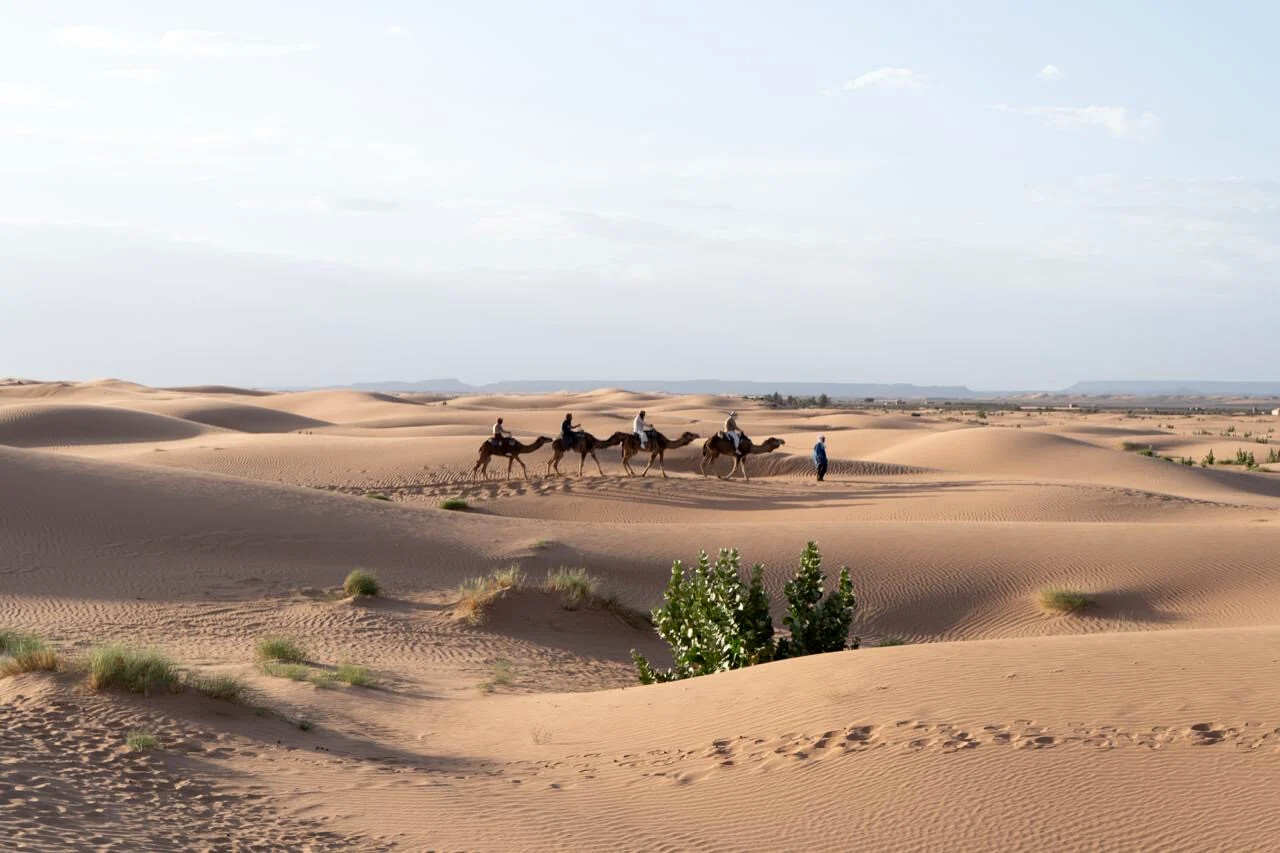
A single night at Arabian Nights Desert Camp still delivers the core of the experience. You'll meet our team in Merzouga near the Shell service station, leave your car in secure parking, and head into Erg Chebbi by camel as the light turns gold. You'll get the sunset camel ride, a chance to try sandboarding on the dunes near camp, dinner under canvas, campfire music and drumming when conditions allow, and a sky full of stars once the fire dies down. In the morning, there's usually just enough time for a quiet moment on the dunes before breakfast and the camel ride back out.
For a lot of travellers, that's genuinely enough. It hits the sensory high points people come to the Sahara for, and it does it without requiring a big block of your itinerary.
What one night costs you
The trade-off is pace. One night means you're arriving with your travel day still in your legs, heading almost straight out on the camels, and packing a lot of experience into one evening and one morning. There's little slack if you're tired, if the light isn't cooperating for photos, or if you'd simply like to sit still in the dunes for longer than a sunset allows.
It also usually means an early departure and a longer onward drive the same day, since most routes from Merzouga to the next stop take a good part of the day. If your schedule already has you moving fast, a single desert night can end up feeling like one more transit day with a nice evening attached, rather than a rest.
What the second day adds
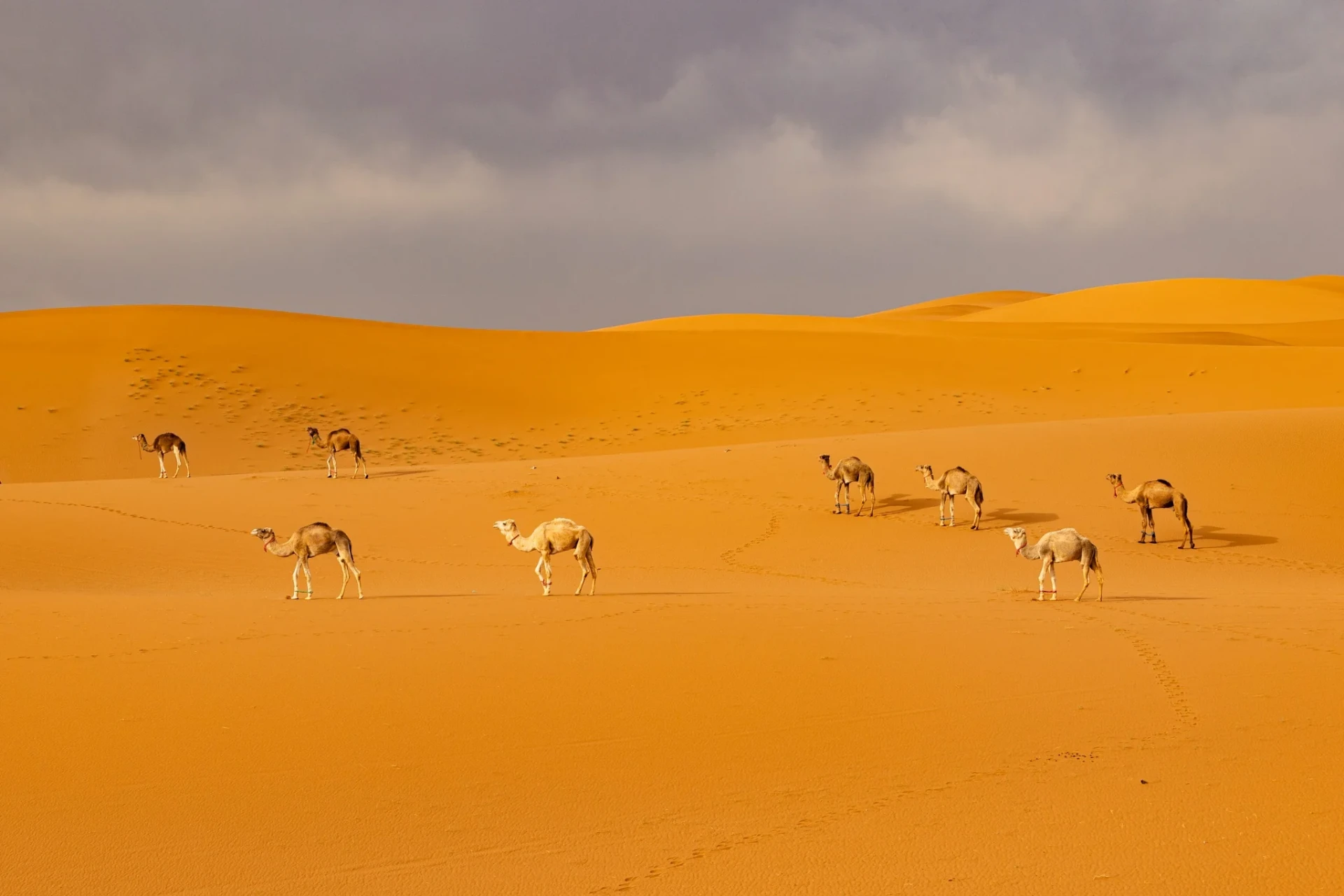
Staying a second night opens up a full day that one-night guests simply don't have time for: our 4x4 excursion into the desert and surrounding areas. This typically includes nomad tea with families living out in the desert, a stop in Khamlia to hear Gnawa music performed by local musicians, a visit to areas known for fossils, and lunch — often medfouna, a Moroccan stuffed bread — shared with a local Amazigh family. It's a completely different register from the first evening: slower, more conversational, and centred on people and place rather than spectacle.
This day is also where photographers and curious travellers tend to get the most value. You're moving through the desert in daylight, seeing textures and colours the sunset camel ride doesn't show you, and meeting people rather than just passing through their landscape.
The quieter second evening
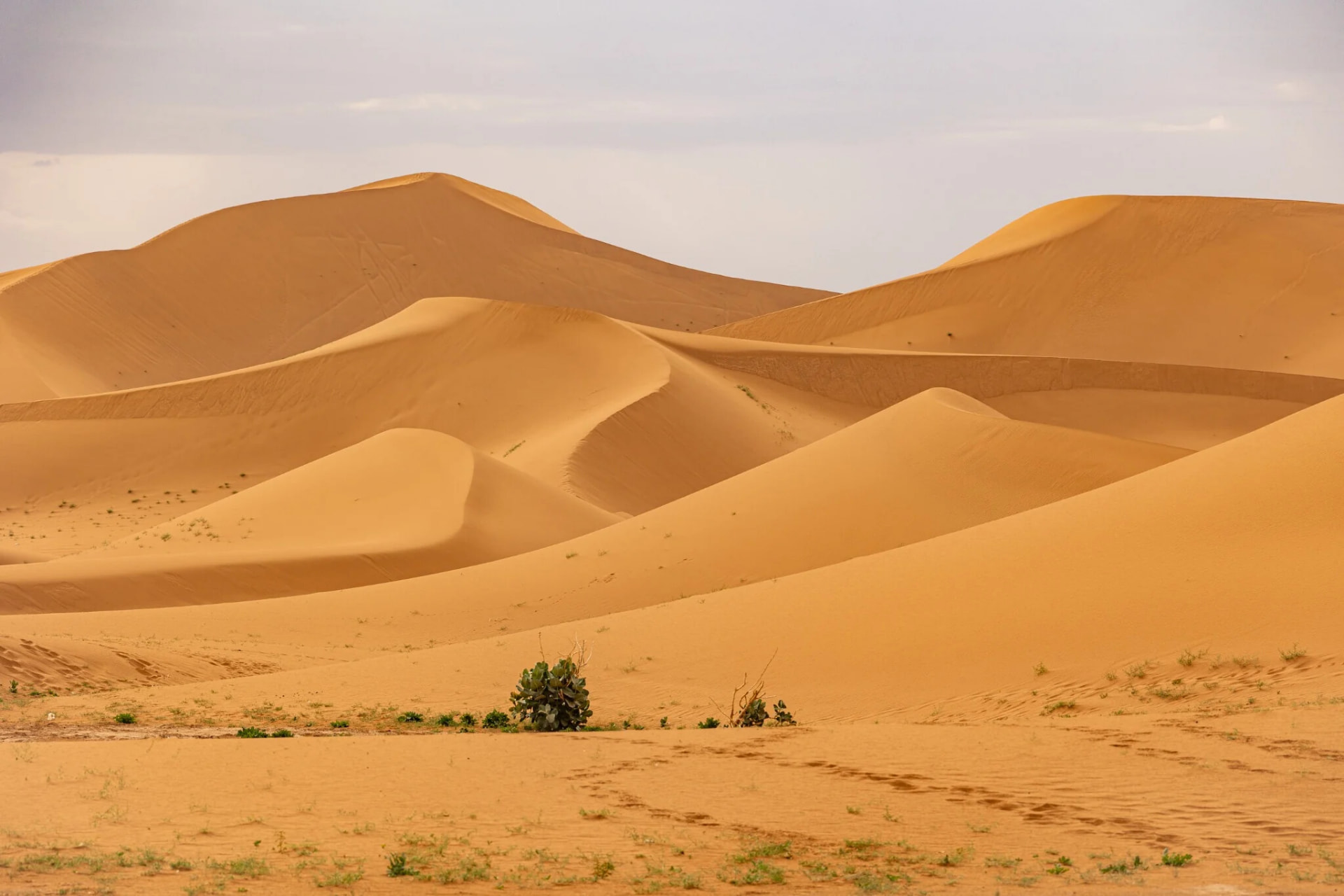
The second evening back at camp has a different character too. The novelty of arrival has worn off, everyone knows their tent and the layout of camp, and dinner tends to feel more relaxed than the first night. Many guests say this is the evening they actually remember best — not because anything dramatic happens, but because they're finally unhurried enough to notice the stars, the quiet, and the size of the dunes around them.
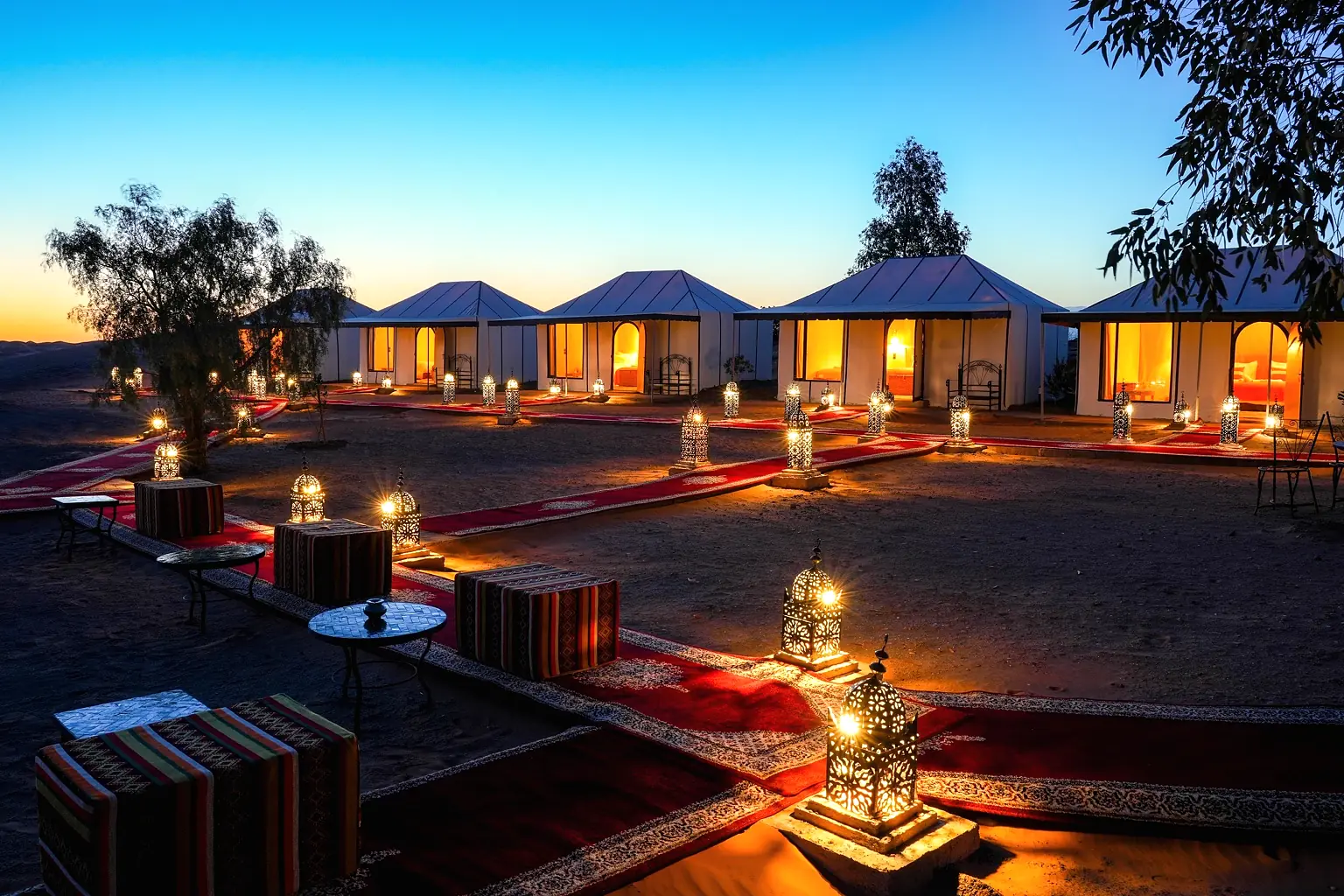
If you want to read more about what a stay actually looks like tent to tent, our guide to what to expect at the camp walks through the full arrival-to-departure experience in more detail.
Who each option suits
Couples on a tight window often do well with one night — it delivers the romance and the postcard moments without needing a spare day in the itinerary.
Families frequently benefit from two nights, simply because children take longer to settle in, and a second, calmer day gives everyone room to enjoy the desert at a gentler pace rather than rushing between camel and car. Our notes on visiting Merzouga with children go into this in more depth.
Photographers tend to want two nights almost by default, since one evening of light rarely feels like enough, and the 4x4 day offers subjects — faces, textures, fossils, market life in Khamlia — that a single sunset simply can't.
Travellers on a tight overall itinerary, especially those doing a loop through several Moroccan cities in a short time, may find one night is the more honest choice. It's better to enjoy a focused single night fully than to squeeze in a second one you'll spend checking the clock.
Fitting it into your route
Most guests reach us as part of a wider loop — commonly Marrakech to Merzouga to Fes, or a route that also takes in Ouarzazate, the Dades or Todra valleys, and sometimes Errachidia. Two nights in the desert generally means one extra day carved out of the rest of that loop, which is worth weighing against how much you want to see elsewhere.
We work with Morocco Shiny Days to arrange transfers between Merzouga and Marrakech, Fes, Ouarzazate, or Errachidia, and they're used to building routes around either a one-night or two-night desert stop. Our journeys and transfers page has more on how that side of things works, and our how it works page explains the booking process end to end.
Longer stays by request
One night and two nights are the two most common patterns, but they're not the only ones. Some guests — particularly those who simply want to slow down after weeks of travel, or who want multiple 4x4 days rather than just one — stay longer. Longer stays can be arranged by request, so if the desert turns out to be the part of the trip you don't want to leave, just ask.
How to decide
If you're still unsure, a simple way to think about it: choose one night if your priority is the sunset-and-stars experience and your schedule is tight elsewhere. Choose two nights if you want the fuller picture — nomads, music, fossils, a shared meal, and a second night to actually settle in rather than just arrive and leave. Our desert experiences page lays out everything included at each stage, from the camel ride to the 4x4 day, and our accommodation page covers the tents themselves if that's part of your decision too.
Whichever you choose, we'd rather help you plan it properly than have you guess. Reach out through our contact page and we can talk through your route, your travel dates, and which option makes the most sense for the rest of your trip.