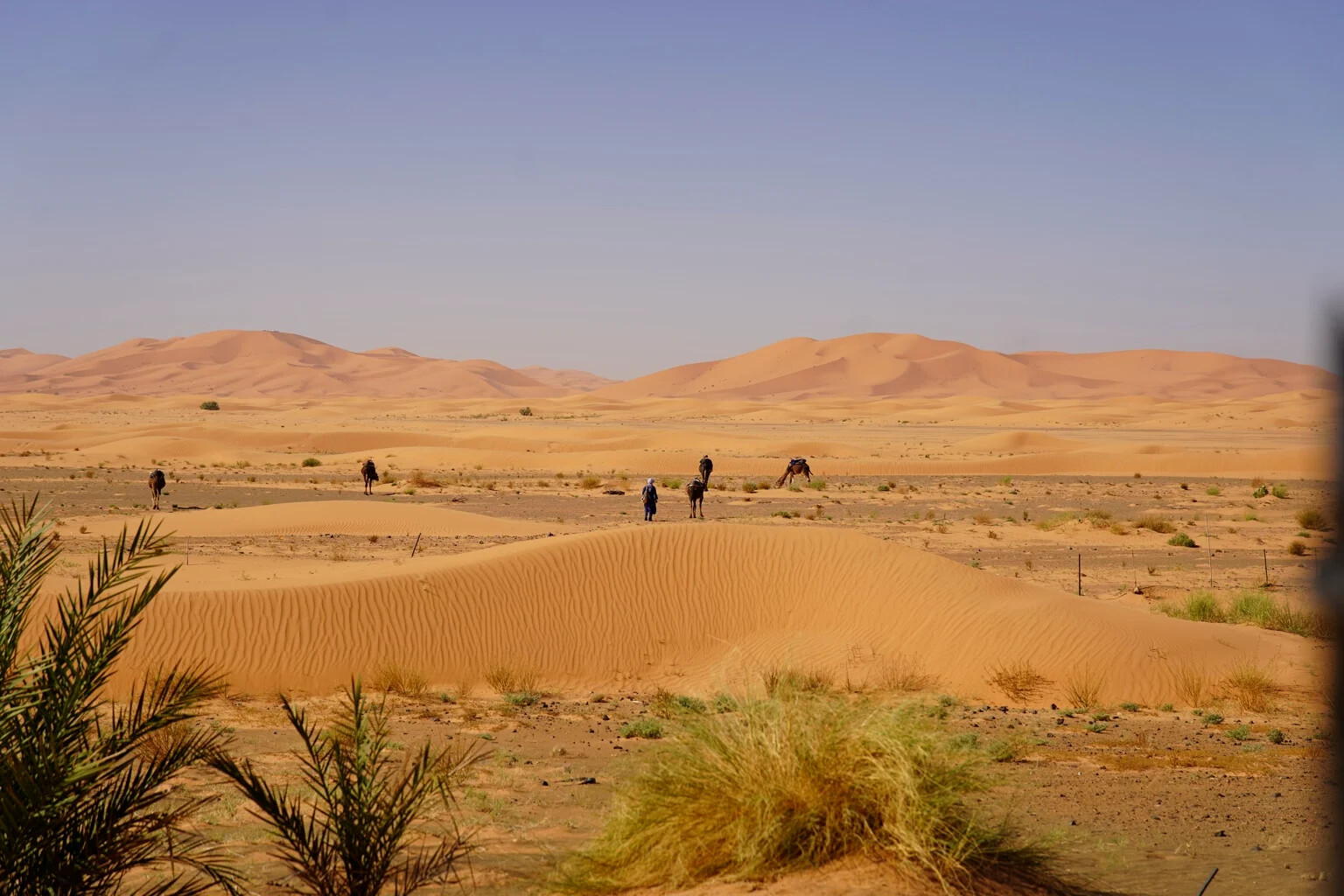
Camels at sunset
Short, deliberate and timed for the light. Usually around 15 to 40 minutes depending on when you arrive and conditions on the day.
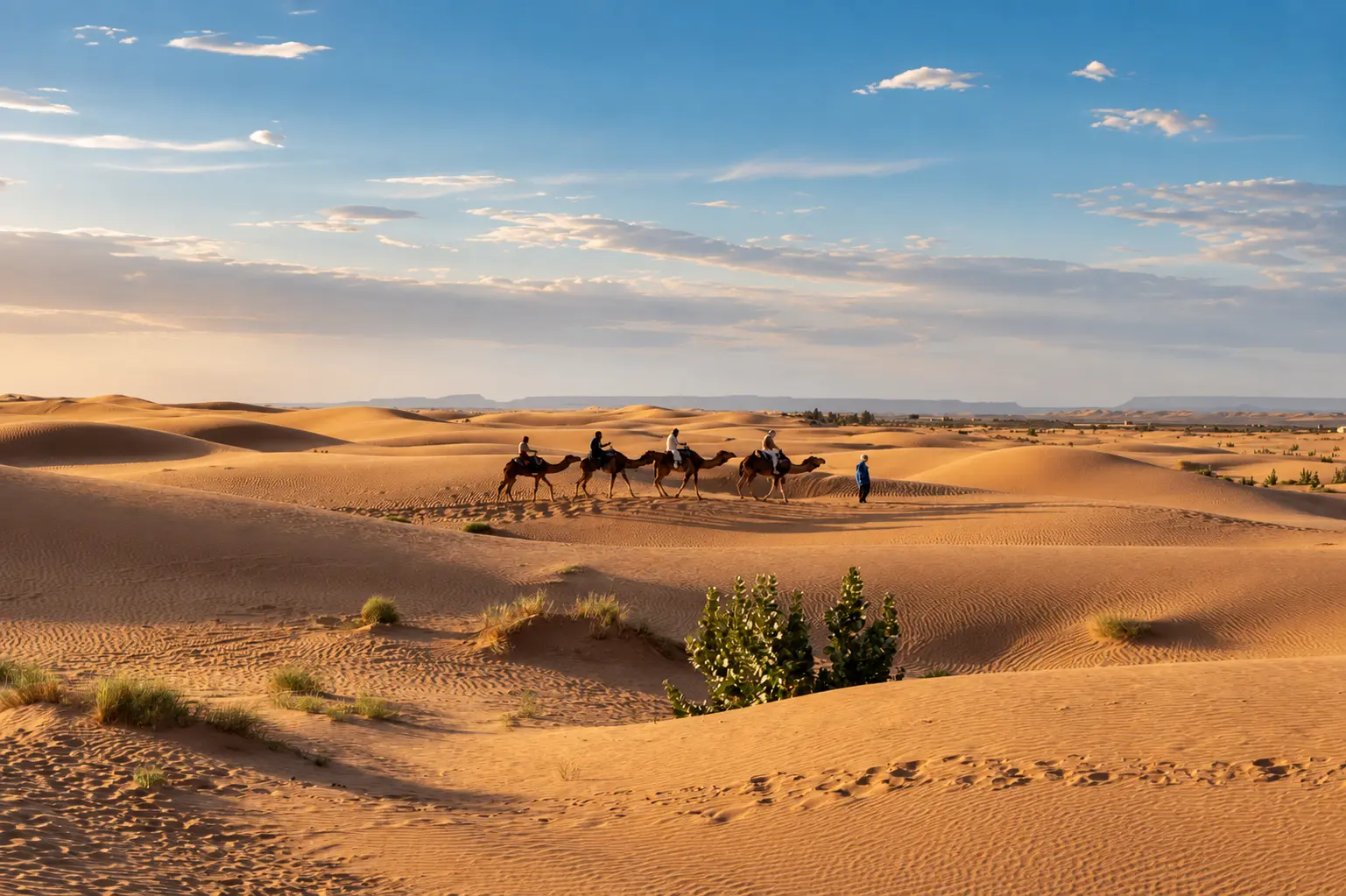
Desert experiences
We offer one night, two nights and longer stays by request. Most guests arrive planning one night; a good number of them wish, on the drive out, that they had booked two. Here is an honest comparison so you can decide before you are standing on a dune regretting it.
Side by side
One night
You arrive in Merzouga in the afternoon, ride out at sunset, sandboard while the light turns, settle into your tent, eat dinner, sit by the fire, sleep with the dunes outside your window and leave after breakfast.
Suits: travellers on a fixed Morocco route, first-time visitors to the Sahara, and anyone with a long drive booked for the following day.
Two nights
Everything above, plus a full day beyond the dunes and a second evening at camp with nothing to pack for. The difference is not more activities — it is not being on a schedule.
Suits: families, photographers, anyone interested in the culture of the region rather than the dunes alone, and travellers who dislike unpacking twice.
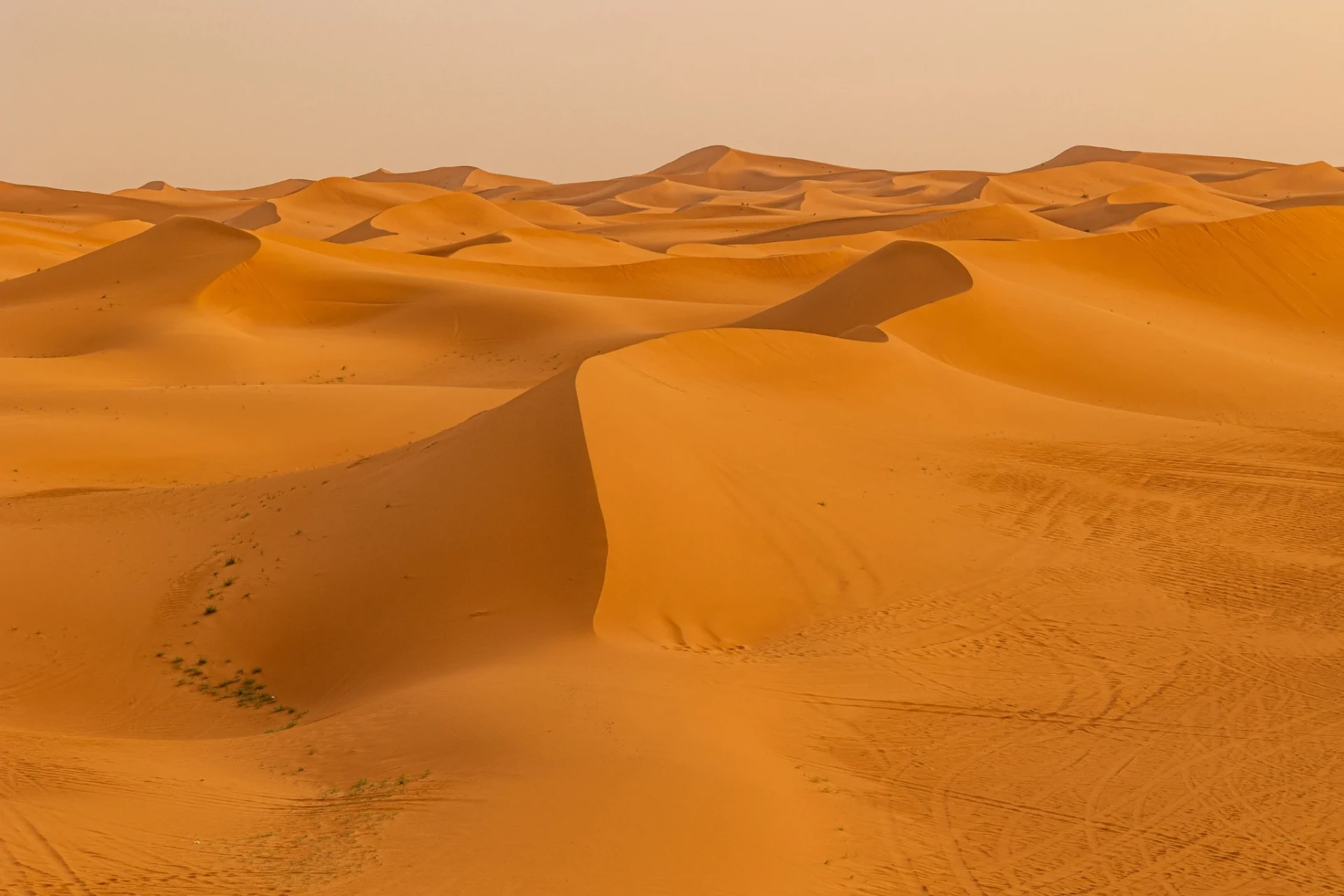
One night introduces you to the desert. Two nights lets you experience it.
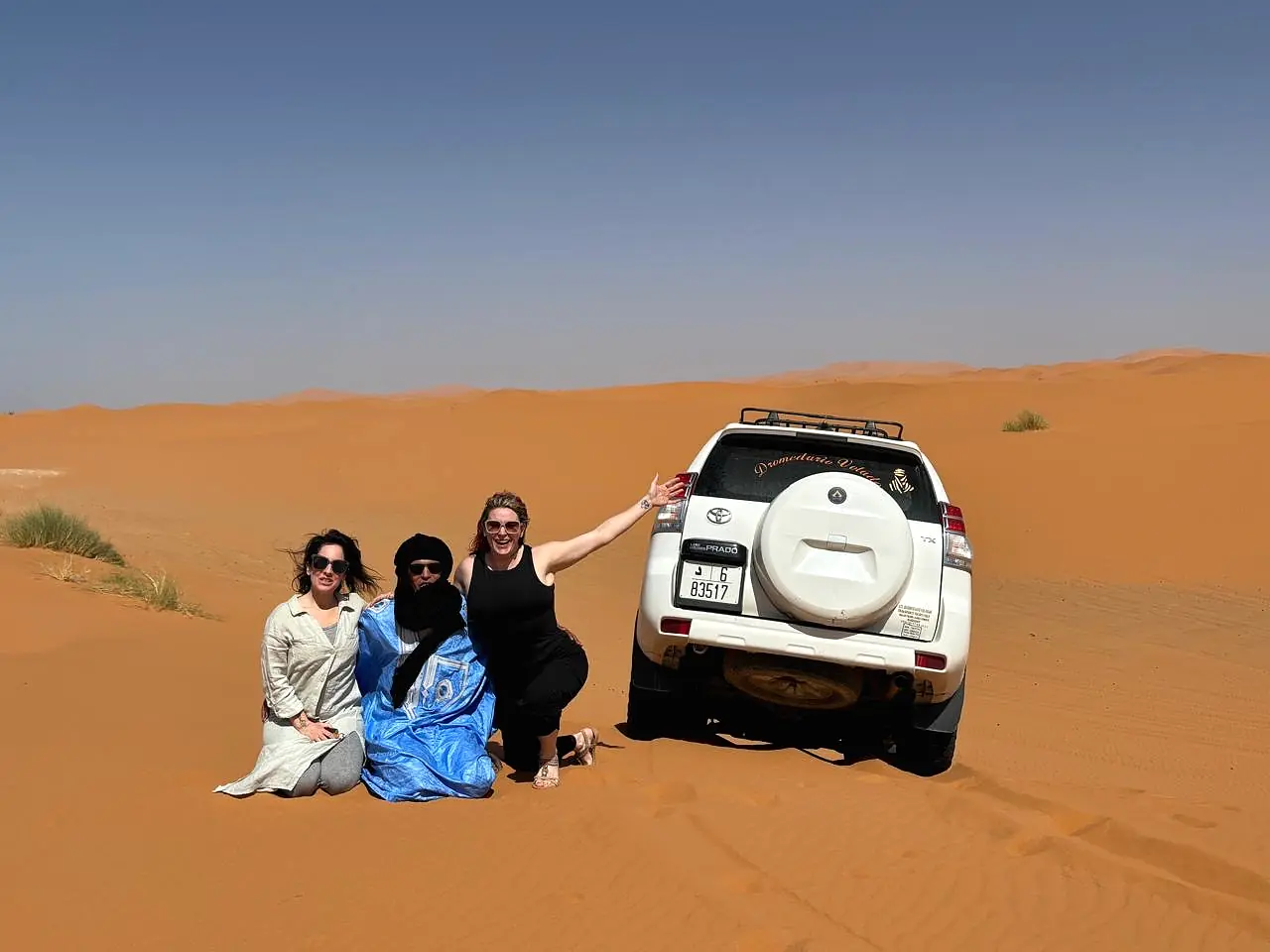
The second day
Erg Chebbi is the headline, but the country around it is what people end up talking about: black volcanic plateau, dry riverbeds, tiny settlements, and the road toward Khamlia where Gnawa music has deep roots.
A two-night stay can include a 4x4 day taking in tea with a nomad family, the Gnawa tradition at Khamlia, fossil areas, and lunch with a local Amazigh family — frequently medfouna, the bread-baked dish this region is known for.
We do not publish a minute-by-minute itinerary for this, because it is shaped by the season, the weather and who is at home that day. What we can say is that it is a real day out, not a lap of the dunes.
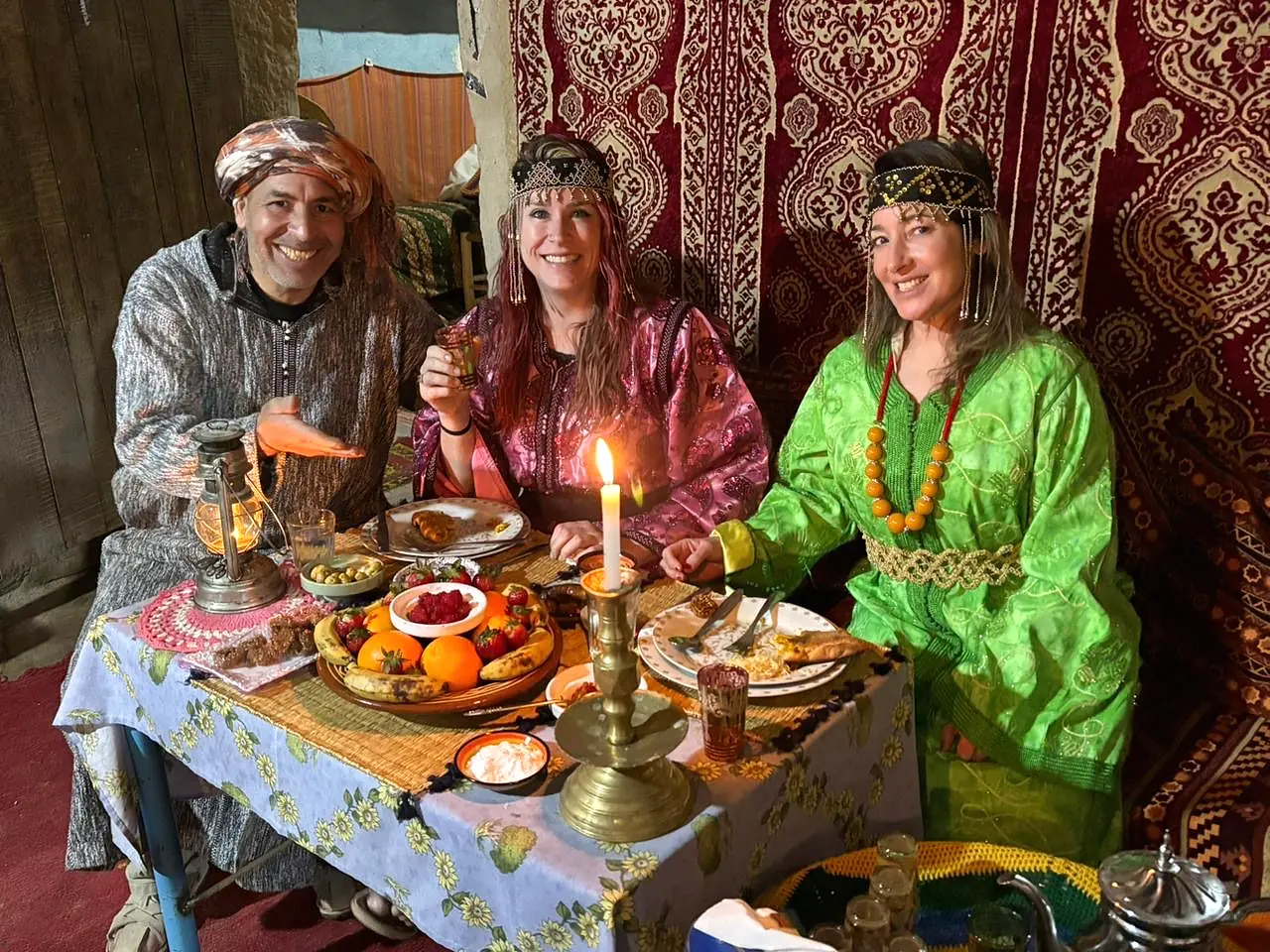
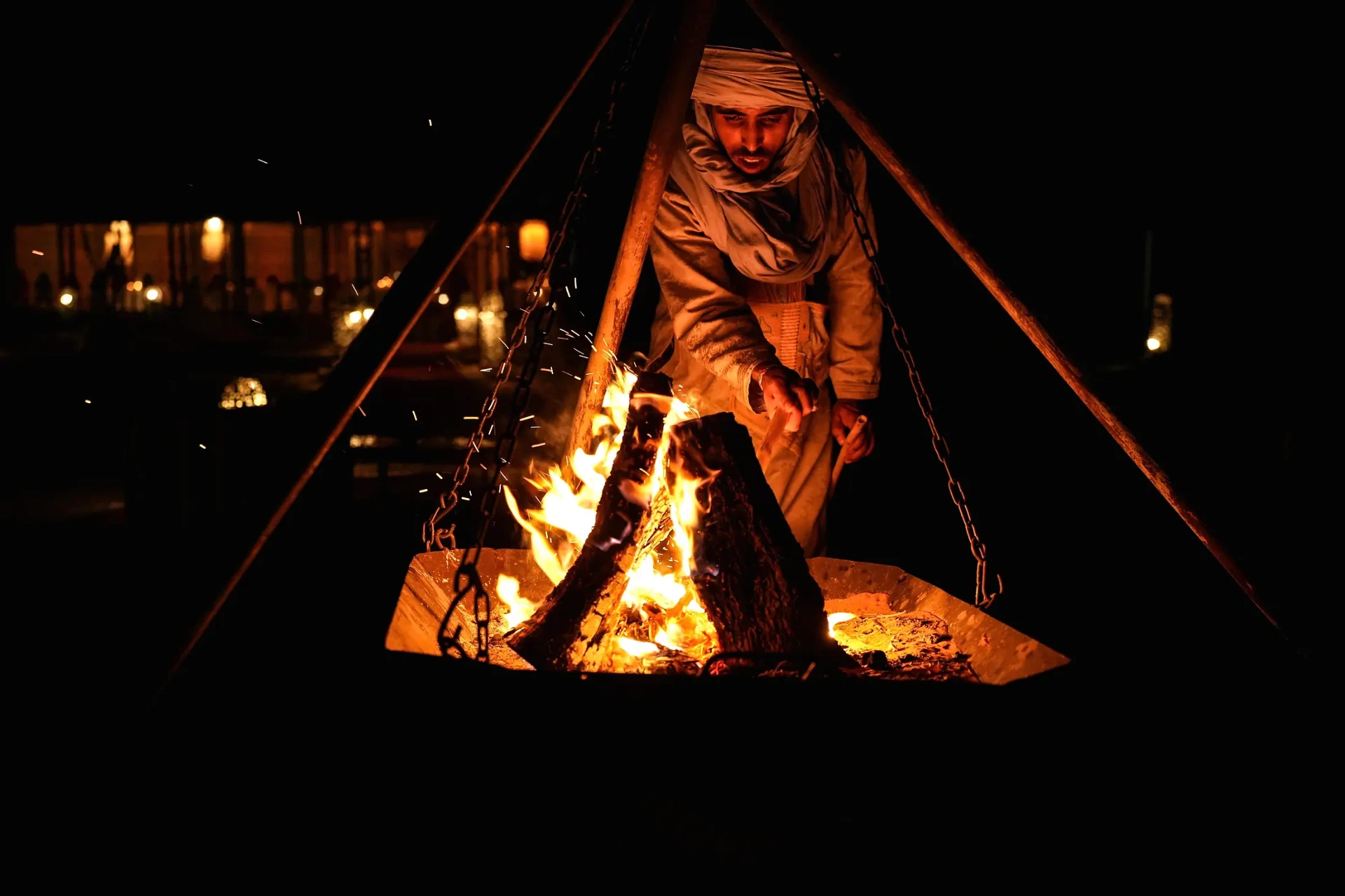
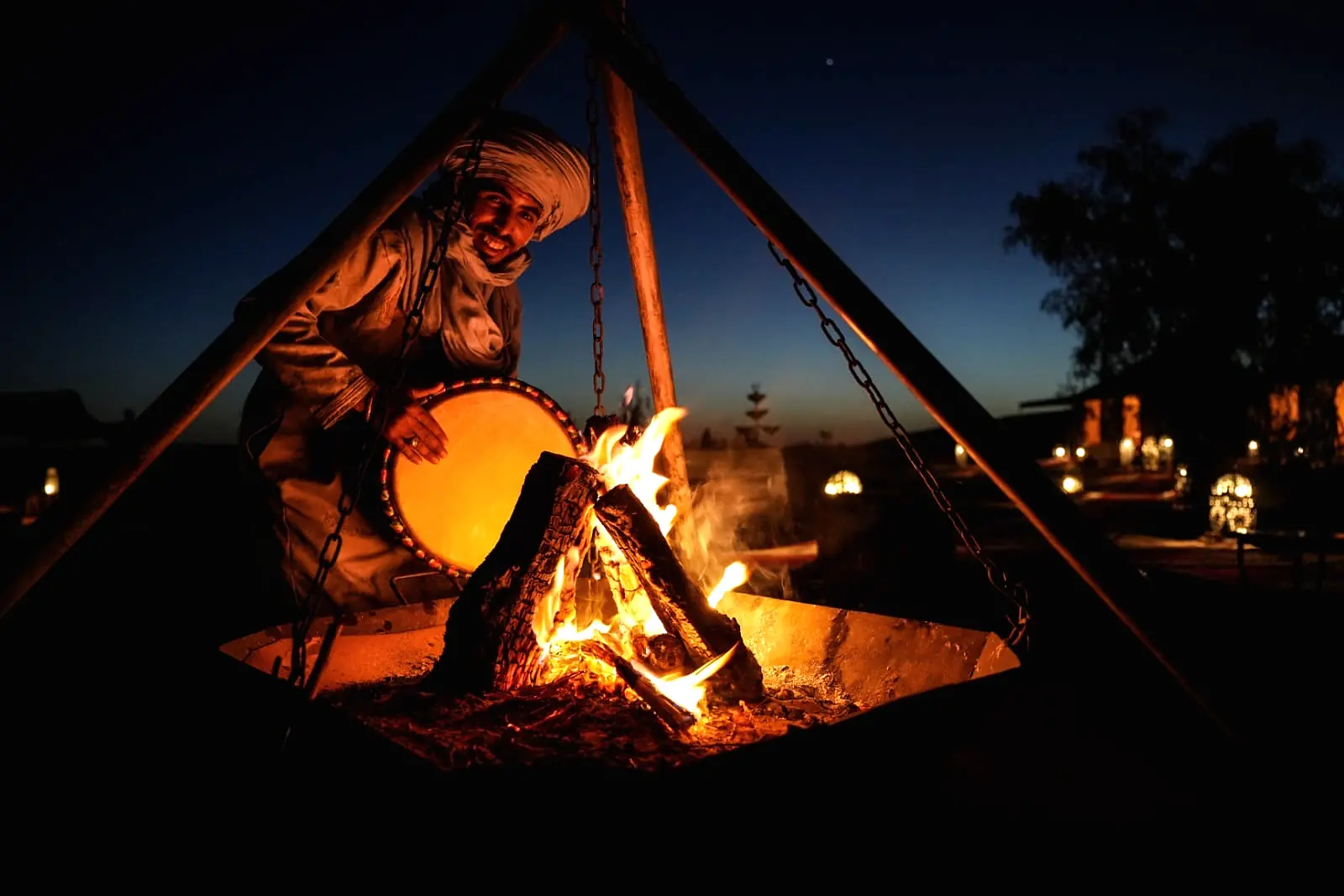
After dinner
The fire is lit each evening. When conditions allow there is music and drumming — unamplified, informal, and usually the thing guests describe first when they write to us afterwards.
Later, walk a hundred metres from the lanterns and stop. On a clear night the Milky Way is plainly visible. Bring something warm; the temperature drops faster than you expect once the sand gives up its heat.
Check availability
Send your dates, group and arrival plan. We reply personally, usually with a couple of practical questions before we confirm anything.