Routes, road character and arrival timing for the drive into Erg Chebbi — plus why the journey is worth planning properly.
Merzouga sits at the eastern edge of Morocco, right against the dunes of Erg Chebbi, close to the Algerian border. It is not a place you pass through by accident. Every route toward it eventually narrows down through one of a handful of valley towns, and understanding that geography makes the whole trip easier to picture before you set off.
Where Merzouga sits
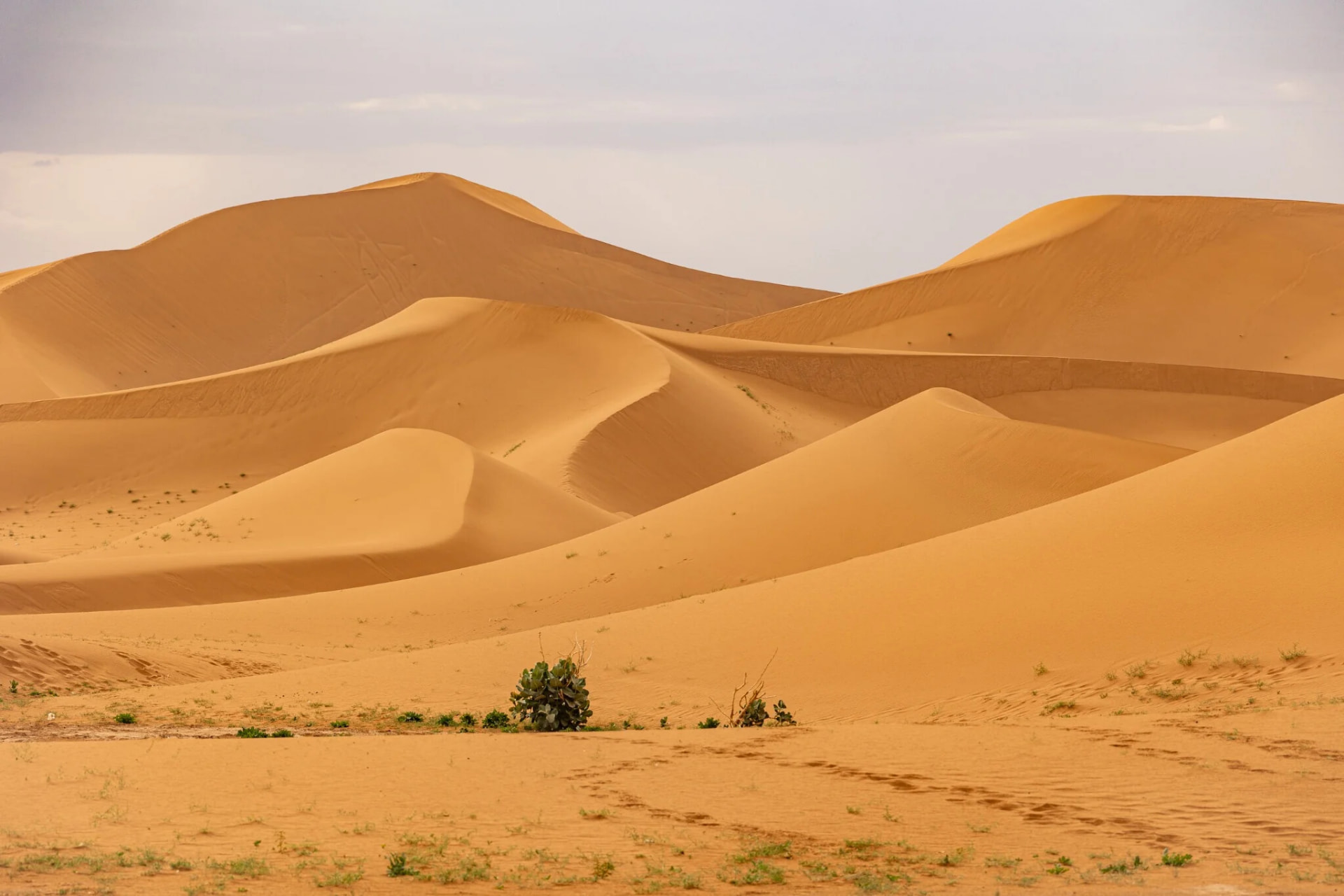
Merzouga is a desert village, not a city, and it exists because of the dunes beside it. It is reached via Rissani and Erfoud, two market towns in the Tafilalt oasis region, themselves fed by roads coming down from the Ziz valley in the north or the Dades and Todra gorge country to the west. Whichever direction you come from, the last stretch is the same: flat hammada plain, then palm groves, then the first pale shapes of Erg Chebbi on the horizon.
From Marrakech
The classic route out of Marrakech climbs the Tizi n'Tichka pass through the High Atlas, a road of switchbacks, cedar and argan slopes, and roadside stalls selling geodes and amethyst. It drops into Ouarzazate, the gateway to the south and a hub for Morocco's film studios and kasbahs, then continues east through Skoura's palmeries and the rose valley toward the Dades and Todra gorges.
From gorge country the road runs on through Tinghir and across a long stretch of open plateau before joining the Erfoud–Rissani corridor into Merzouga. It is a full day of changing landscape — mountain, kasbah valley, gorge, plain — and most travellers find it far more enjoyable split across two days than pushed through in one, especially with an early High Atlas start.
From Fes
Coming from Fes, the route runs south through the Middle Atlas, past Ifrane and Azrou's cedar forests where it is genuinely possible to see snow and monkeys in the same afternoon during cooler months. The road then drops through Midelt and follows the Ziz valley, one of the most striking oasis corridors in Morocco, with the river cutting through palm groves overlooked by kasbah ruins on the cliffs above.
South of the Ziz gorge the valley widens into the Tafilalt, and the road passes through Erfoud, known for its fossils, and Rissani, the old caravan market town, before the final approach to Merzouga. The Fes route is generally considered the more scenic and less winding of the two main approaches, though it is still a long day's drive from the north of the country.
From Ouarzazate and Errachidia
If you are not starting from Marrakech or Fes, Ouarzazate and Errachidia both make far shorter, more manageable starting points for reaching Merzouga. Ouarzazate connects through Dades and Todra gorge country as described above, while Errachidia sits directly on the Ziz valley road and offers one of the more direct approaches into the Tafilalt and on to Merzouga.
Both towns have small airports and are useful if you would rather do the long mountain crossing on a separate day, or if you are joining a multi-day southern circuit that already includes the Dades and Todra gorges. We regularly arrange private transfers from both, and exact routing and timing are always confirmed once your journey is arranged.
Private transfer, self-drive or bus
There are three realistic ways to reach Merzouga, and each has a different trade-off.
- Private transfer: a driver collects you at your riad, hotel or airport and takes you the whole way, with stops for tea, photos and lunch built in wherever you like. It removes the stress of mountain driving entirely and is the option most guests choose for a first Sahara trip.
- Self-drive: gives you total flexibility to stop when you want, but the Tizi n'Tichka and the gorge roads demand real concentration, with tight bends, occasional fog in the High Atlas, and long stretches without services. It suits confident drivers who enjoy the road itself.
- Bus or shared transport: the most economical option, running on fixed routes through Ouarzazate or via the Ziz valley, but with less flexibility for stops and a fixed schedule that you build your day around rather than the other way round.
Whichever you choose, we would rather you arrive comfortably than quickly. Our team works with Morocco Shiny Days' private Sahara journeys to arrange private direct transfers and multi-day journeys from Marrakech, Fes, Ouarzazate, Errachidia and elsewhere, with a driver who knows the route well. See journeys and transfers for how this is put together.
Why arriving in daylight matters
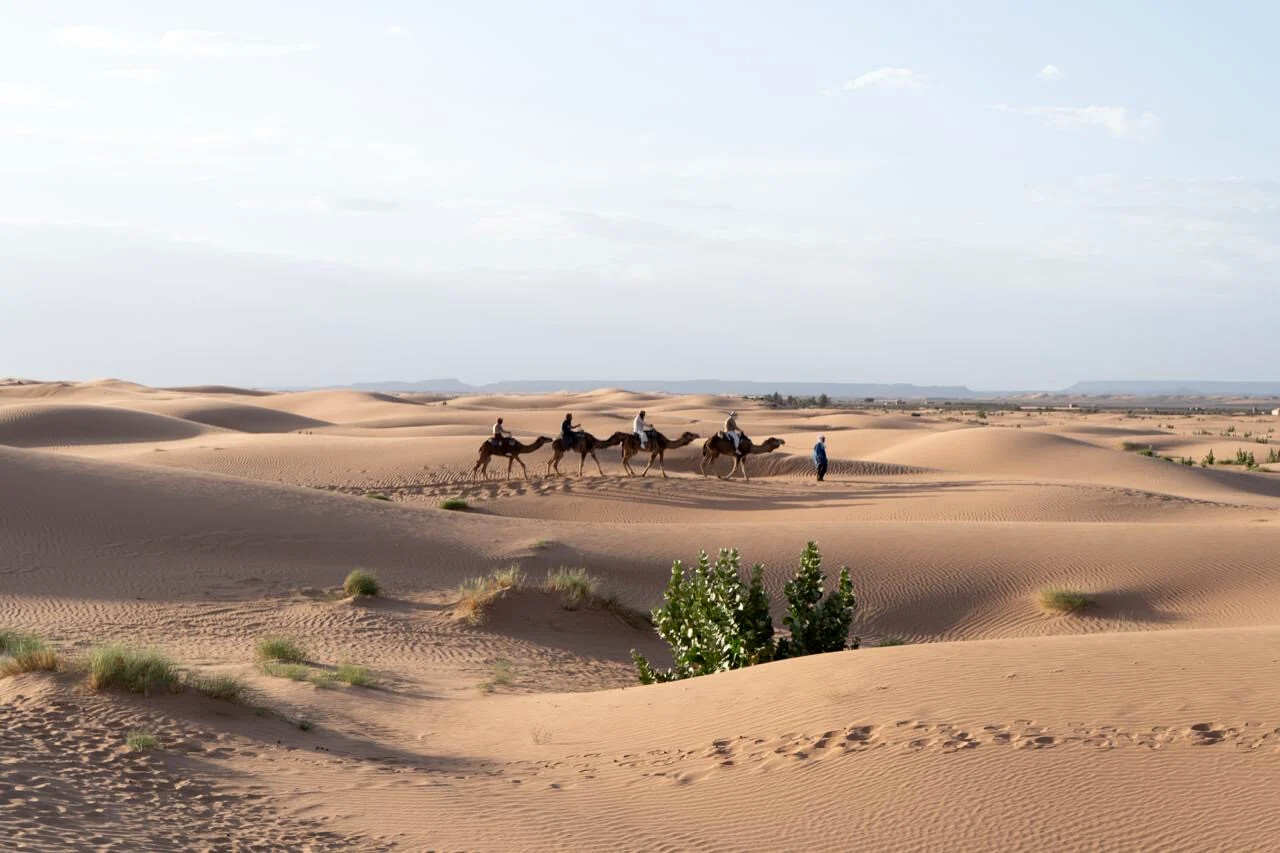
Erg Chebbi's dunes are best seen, and best photographed, in the low light of late afternoon, and the camp's rhythm is built around a sunset camel ride into the desert. Arriving in Merzouga with daylight to spare means you can make that ride, rather than arriving after dark and going straight into camp by vehicle instead.
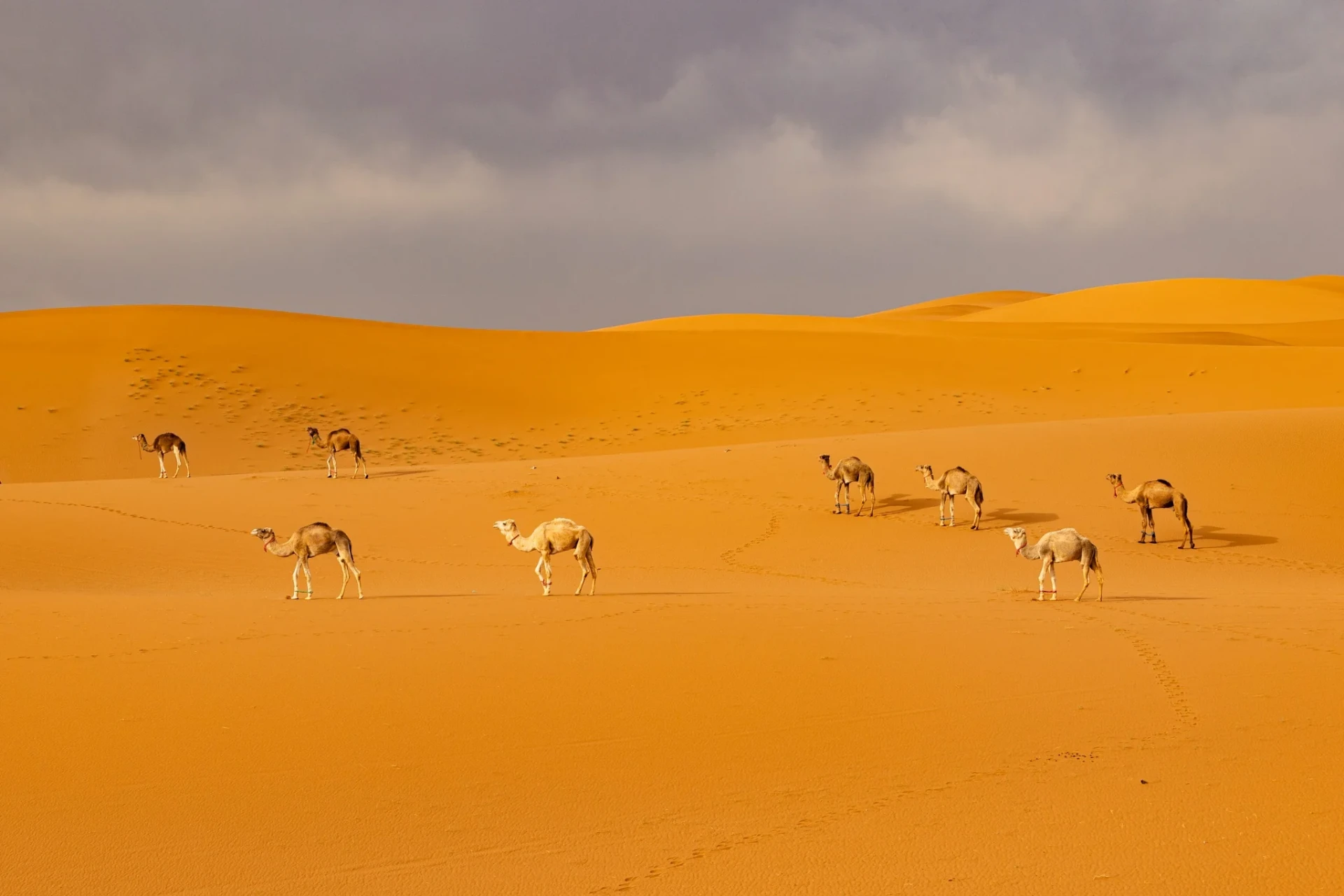
It also simply makes the handover easier. The last stretch of track from the village to the dunes is unpaved, and doing it while you can still see the landscape around you — the shape of the erg, the first camels, the camp's silhouette — is part of the experience rather than an inconvenience to get through.
Arrival at the Shell service station in Merzouga
However you arrive, the handover point is the same: our team meets you in Merzouga near the Shell service station. Your car is left in secure parking there, and you continue with the camp team from that point, normally beginning with the sunset camel ride into the erg, which usually takes somewhere around fifteen to forty minutes depending on timing and conditions on the day.
This is a well-established meeting point that every driver in the region knows, which is part of why it works so smoothly whether you have come by private transfer, self-drive or bus. We walk through exactly how this works, step by step, on our how it works page, and our team will always confirm exact timings with you once the journey itself is arranged.
Breaking the journey into multiple days
Both the Marrakech and Fes routes cover a great deal of ground, and neither needs to be done in a single push. Many guests break the Marrakech route with a night in or around Ouarzazate or in the Dades or Todra gorges, turning a long transfer day into two shorter, far more relaxed ones with proper time to explore kasbahs, valleys and gorge walks along the way.
The same applies from Fes, where an overnight around Midelt or in the Ziz valley breaks up the Middle Atlas and Ziz sections nicely. If you are combining Merzouga with other stops on a wider Morocco trip, our Erg Chebbi or Erg Chigaga guide is a useful companion for thinking about the desert leg alongside the route in.
Practical tips for the road
A few things are worth planning for regardless of which route or which mode of transport you choose.
- Fuel up before leaving major towns — stations thin out on the mountain and gorge sections.
- Carry water in the car; the plains east of the gorges and the approach across the hammada are dry and often warmer than they look from a shaded valley town.
- Mountain roads can be affected by fog, heat haze or, in winter, occasional snow on the Tizi n'Tichka or Middle Atlas — build in flexibility rather than a fixed arrival time.
- Keep hand luggage accessible and pack a small bag separately for the camel ride into camp, since the walk from parking to the dunes is easiest without a full suitcase in hand.
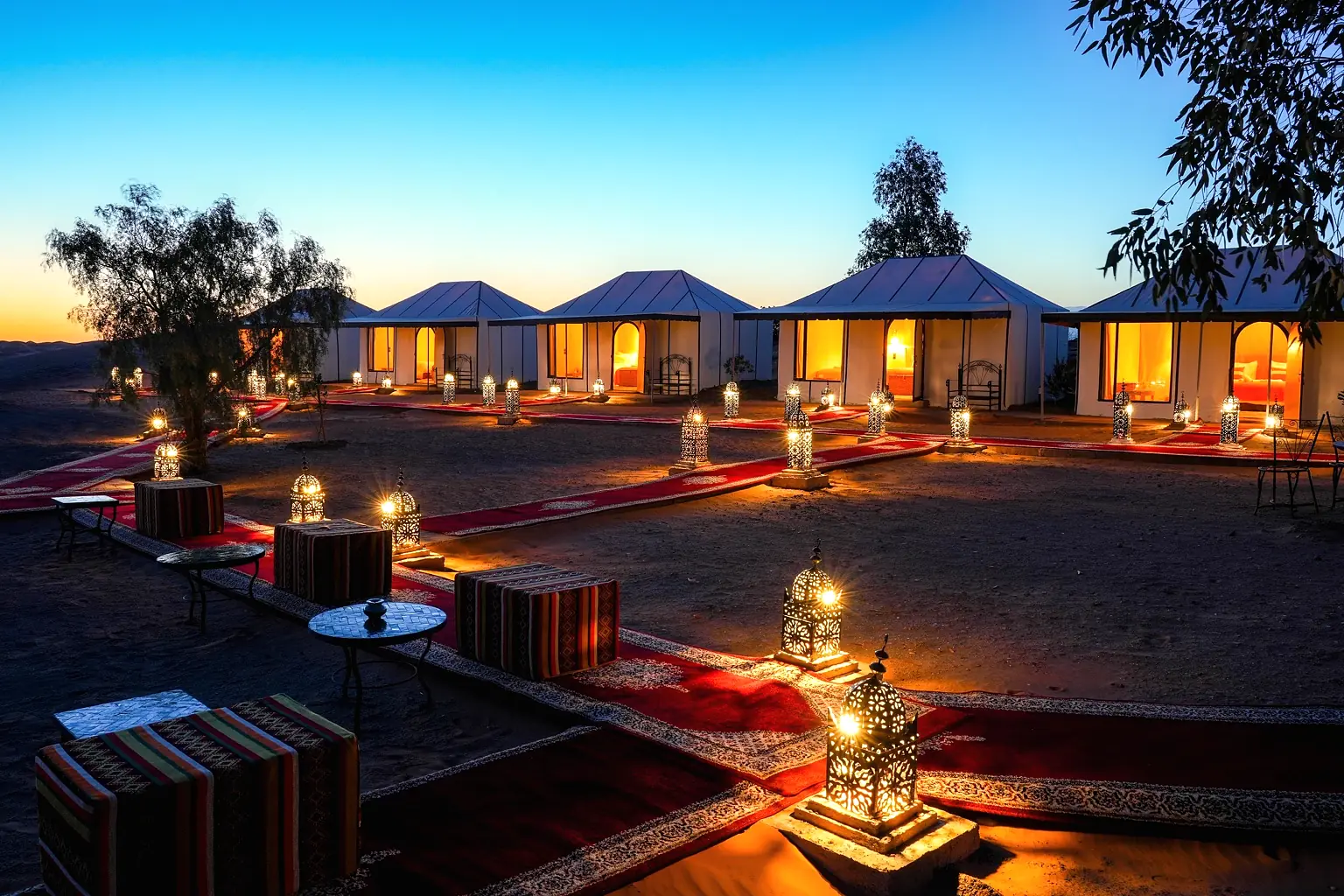
For everything on tents, meals and what happens once you reach camp, our accommodation page covers the detail, and our team is always happy to talk through routing questions directly — reach us via contact and we will help plan the road to Merzouga around the rest of your trip.