Our story
Two people, one stretch of desert
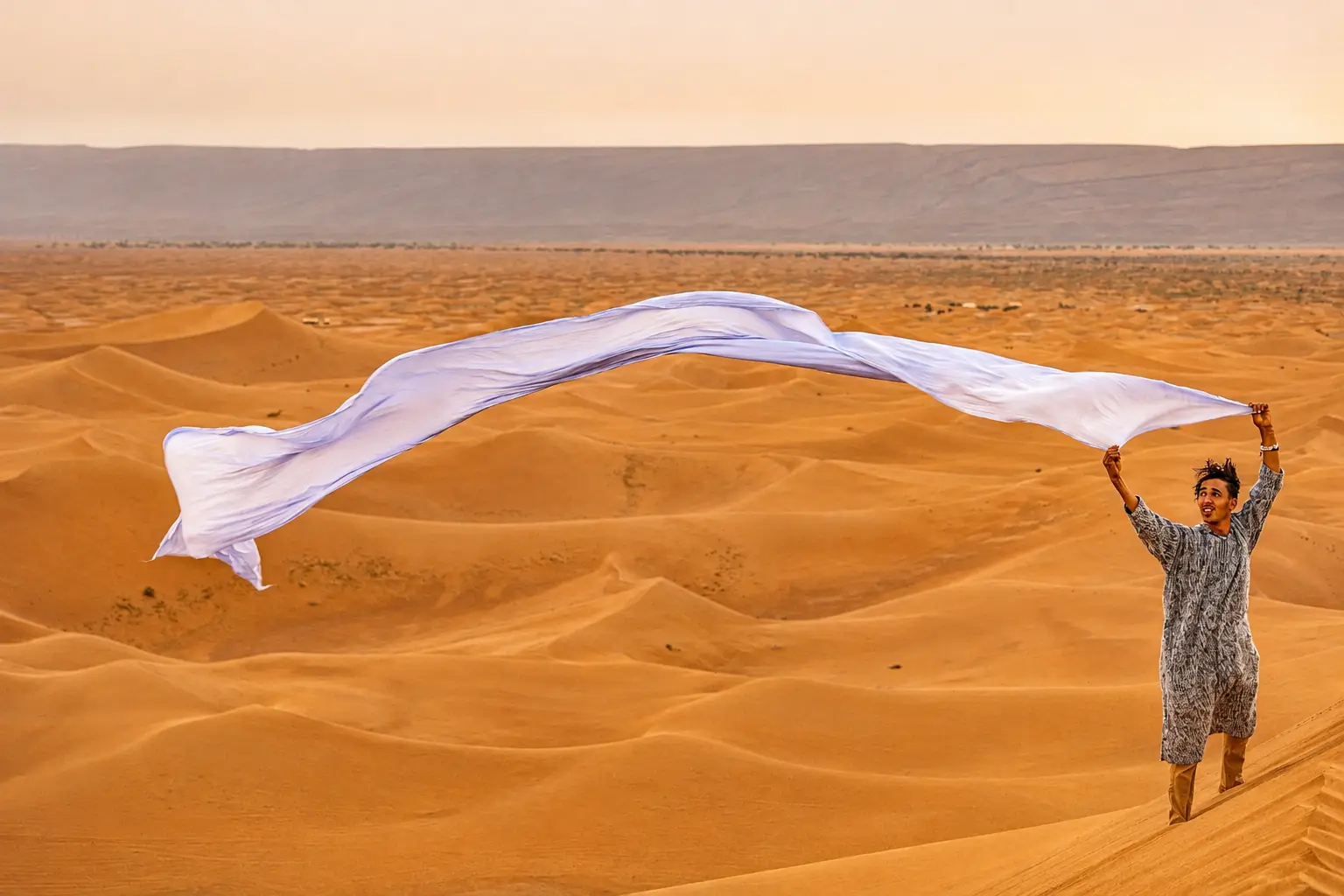
This camp was not designed in an office. It grew out of years of listening to travellers describe what they hoped a night in the Sahara would be, and quietly noting the gap between that and what they usually got.
Oualid
From guiding to hosting
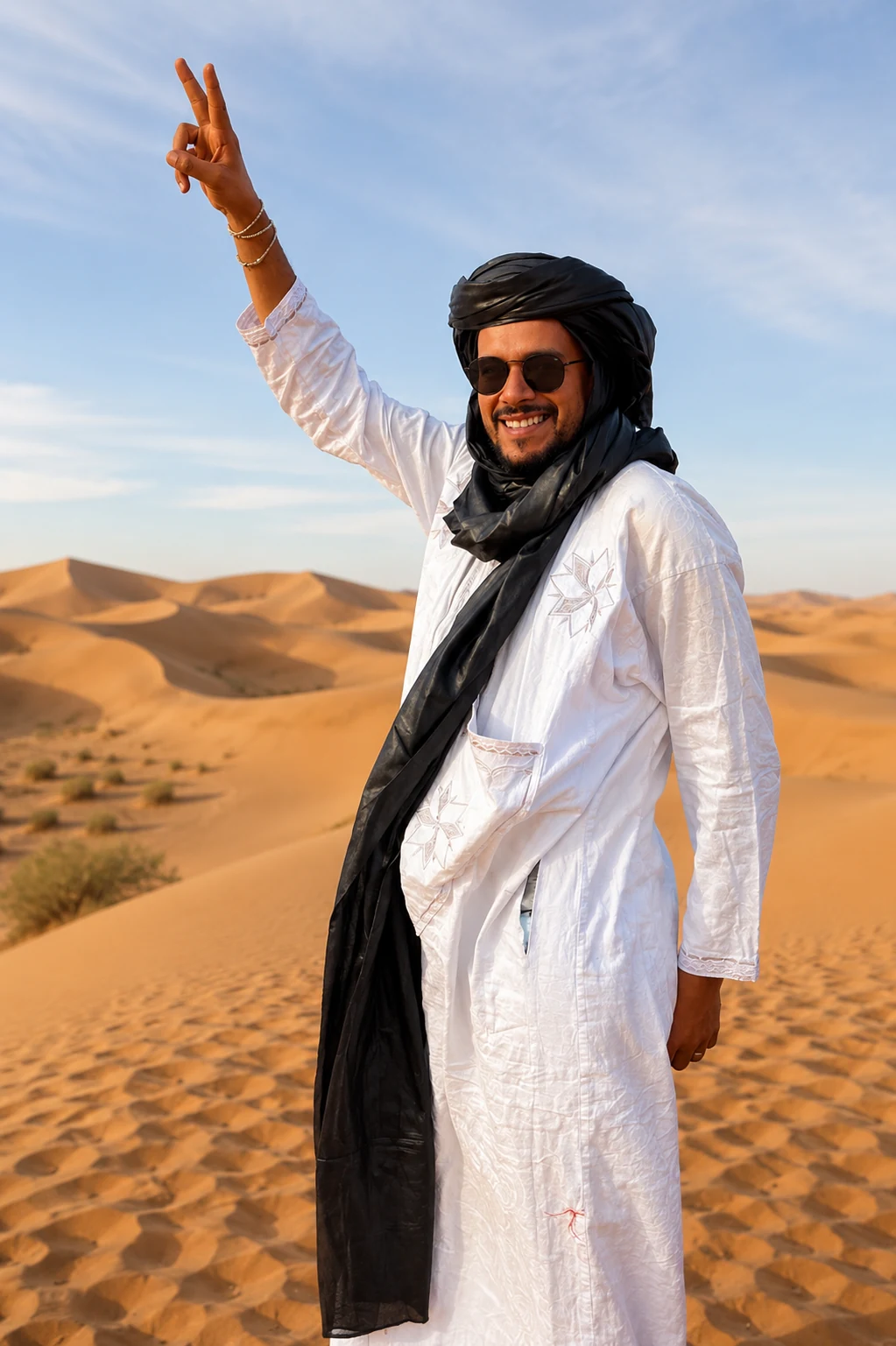
Oualid spent years guiding and designing private journeys through Morocco: routes over the Atlas, through the valleys and down into the south. That work teaches you very quickly what travellers respond to and what they merely tolerate.
The pattern was consistent. People came back from the desert talking about the light, the silence and the evening around the fire. They did not come back talking about the accommodation, except when it had let them down: a shared bathroom block a hundred metres across the sand, a cold night with one thin blanket, a dinner served late to a crowd.
The camp is his answer to that. Keep it small enough to host properly. Put a real bathroom in every tent. Cook well. Then get out of the way and let the desert do what it does.
Ali
A connection to this desert
Ali grew up with direct connections to this part of Morocco and has long organised private journeys across the country, particularly for Spanish-speaking travellers. Where Oualid arrived at the desert through guiding, Ali knows it as home ground.
That combination turned out to matter. One of them could see the trip as a visitor experiences it — arriving tired, unsure where to park, wondering whether the camel is really necessary. The other knew which dune to walk up at what hour, and which family in the region cooks the best medfouna.
Ali's brother Mohamed lives locally and manages the camp day to day, which means there is always someone here who reads the weather properly and knows when the fire will hold.
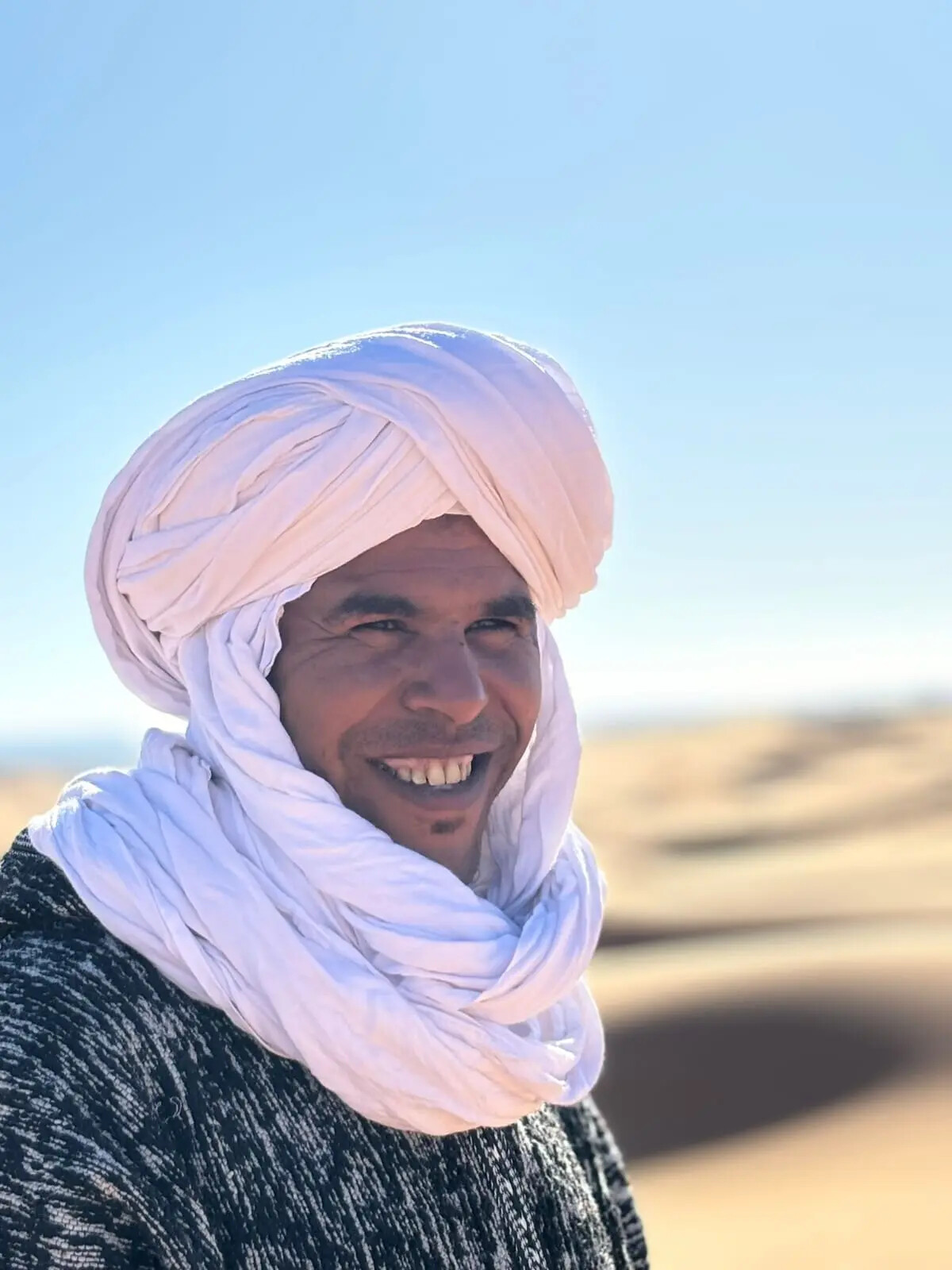
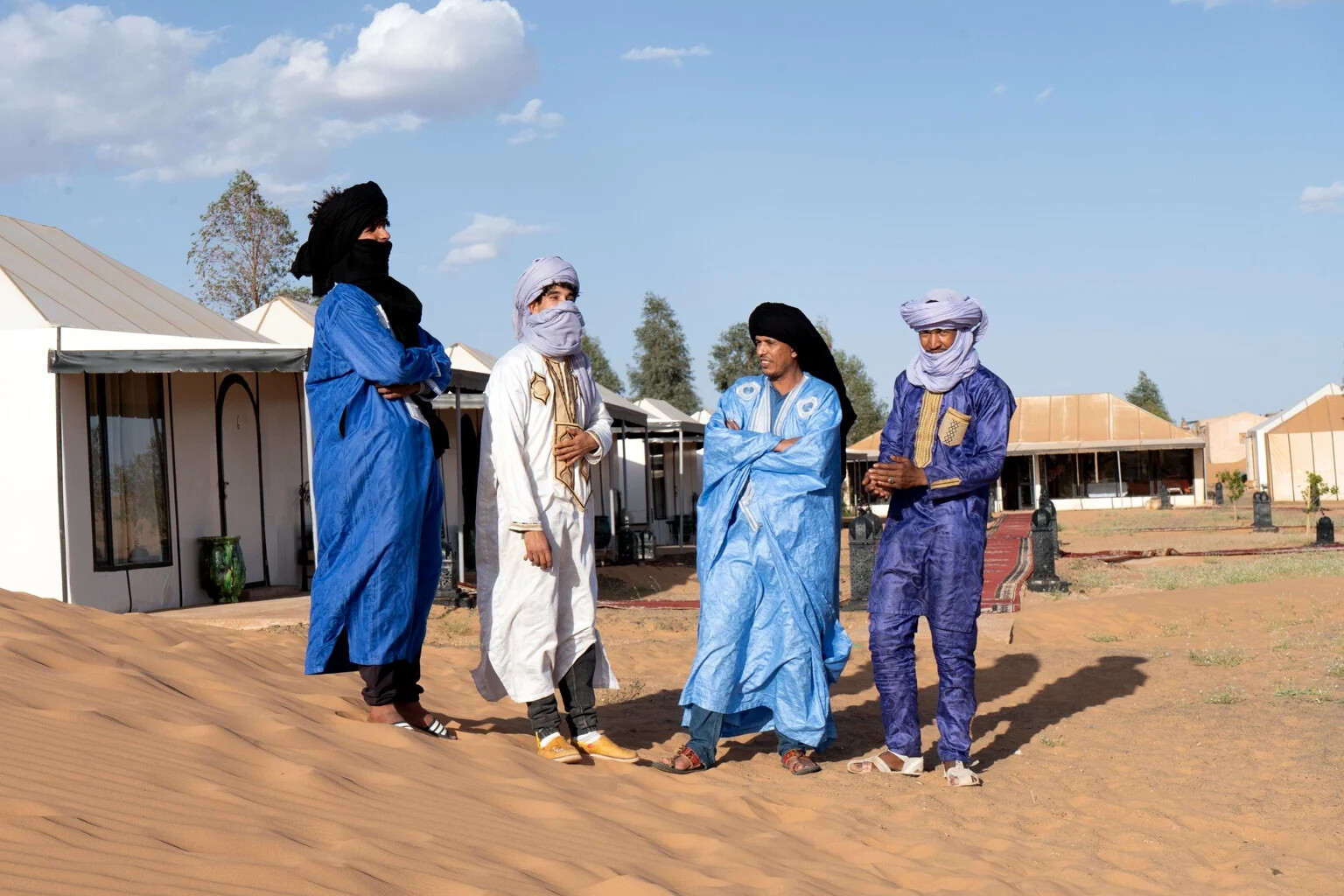
A night in the Sahara should feel personal, calm and rooted in the place it happens.
What we learned
The things guests actually value
After enough journeys, the list stops being a matter of opinion. Travellers want a beautiful setting and a genuine welcome. They want to sleep comfortably and use their own bathroom. They want to eat well. They want enough flexibility to shape their own evening, and enough time to actually feel where they are rather than photograph it and leave.
Everything at the camp follows from that list. Ten tents, not thirty. A private ensuite in each one. Dinner cooked and served here. A fire that runs as long as people are sitting around it. No performance of luxury, and no pretending the desert is something other than the desert.
We also try to be straight about what we cannot promise. Conditions here change with the season and the weather, so we confirm details with guests rather than publishing guarantees we would have to break.
The team
The people you will actually meet
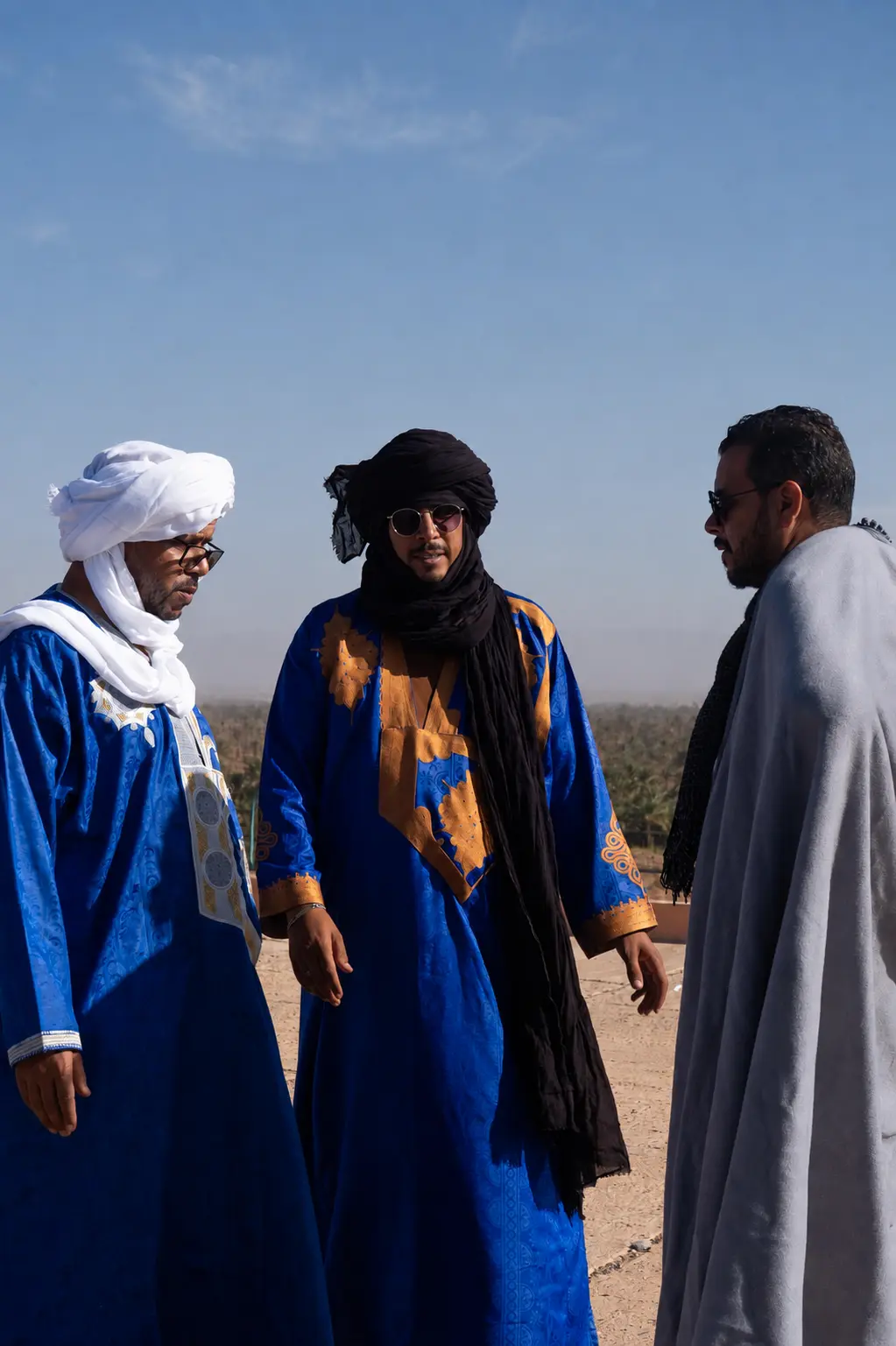
The people who cook, drive, tend the camels, keep the tents in order and light the fire are from this region. They are the reason an evening here feels hosted rather than staged, and the reason guests remember names afterwards.
Separately from the camp, journeys and transfers across Morocco are arranged with our associated team at Morocco Shiny Days, so the drive south and the night in the dunes are planned by people who talk to each other.
Check availability
Come and see it for yourself
Send your dates, group and arrival plan. We reply personally, usually with a couple of practical questions before we confirm anything.