Camels, sandboarding, family tents and the practicalities of a desert night with children in tow.
Parents ask us the same honest question in different ways: will this actually work with our children, or are we setting ourselves up for a long night in a tent regretting it? The short answer is that the Sahara is genuinely one of the best family experiences in Morocco — but it helps to know what to expect before you go, so nothing catches you off guard.
Does the desert work with kids
In our experience, yes, and often better than parents expect. Children tend to love the parts of a desert stay that adults sometimes take for granted: riding a camel, running down a dune, digging in the sand, watching a fire crackle in the dark, and seeing more stars than they've ever seen in one sky. It's tactile, physical, and completely different from anything at home, which is exactly what makes it memorable for them.
What tends to matter most isn't the desert itself but the logistics around it — where everyone sleeps, whether there's a proper bathroom, what happens if someone doesn't fancy the camel that day, and how tired everyone already is by the time you arrive. We'll go through each of those.
Family tents and why the ensuite bathroom matters
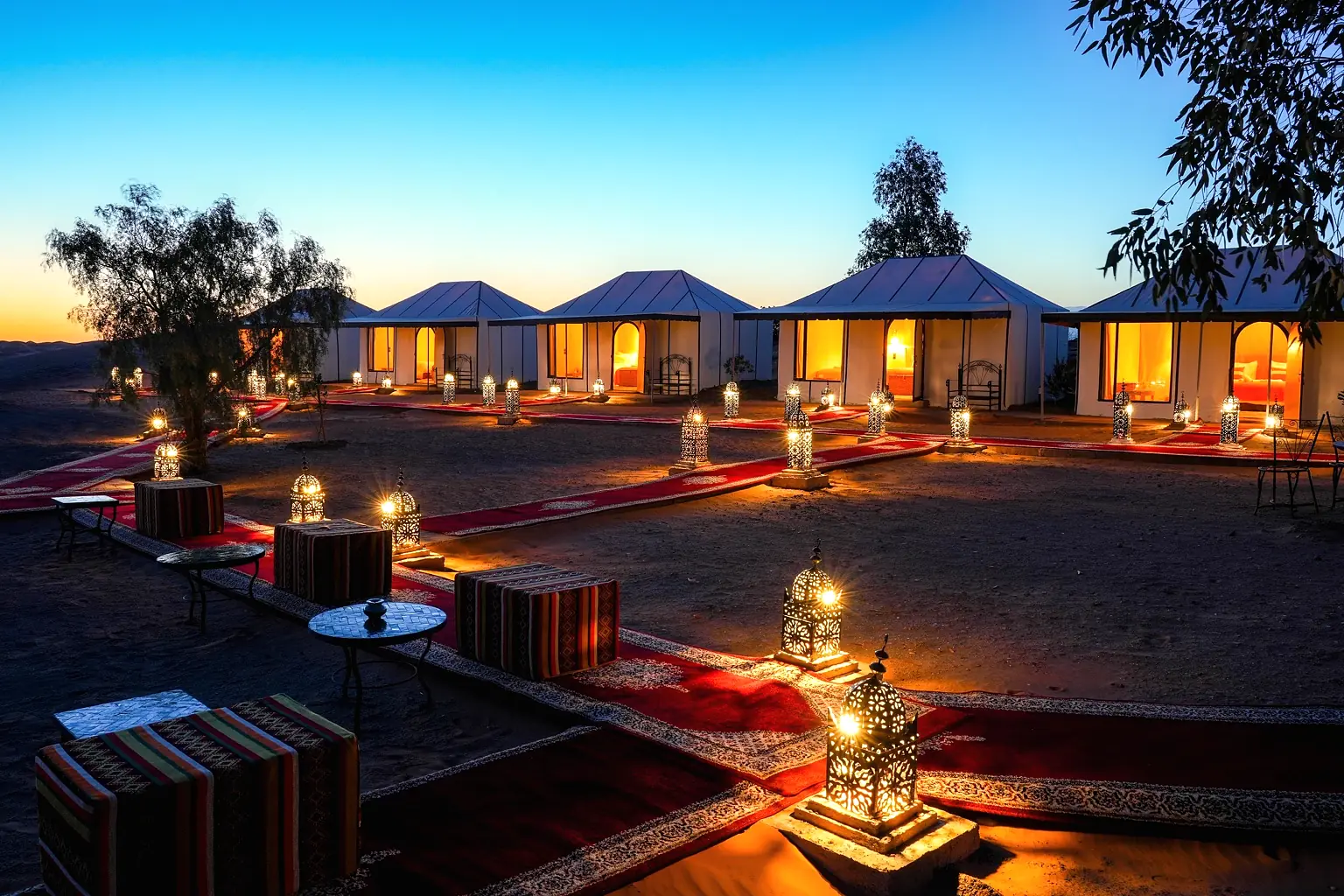
We have ten tents in total, four of which are family tents sleeping up to six people, with the rest being deluxe tents. Every single tent, family or deluxe, has its own private ensuite bathroom with a hot shower and a flush toilet, a proper bed rather than a mat on the floor, and a glazed window facing the dunes.
With children, the private bathroom is often the detail that makes or breaks the trip. Shared or outdoor facilities can be a genuine source of anxiety for kids at night, and a middle-of-the-night trip across camp is the last thing any parent wants to manage. Having a toilet and shower a few steps from the bed, inside your own tent, removes that worry entirely. If you'd like the full picture of what the tents look like, our accommodation page has more detail, and our guide to what to expect at the camp walks through a typical stay from arrival onward.
If you have a specific family configuration in mind, or particular needs around sleeping arrangements, it's best to ask us when you enquire. We'll be honest about what's possible and what isn't, rather than promising something we can't deliver on the day.
The camel ride with children
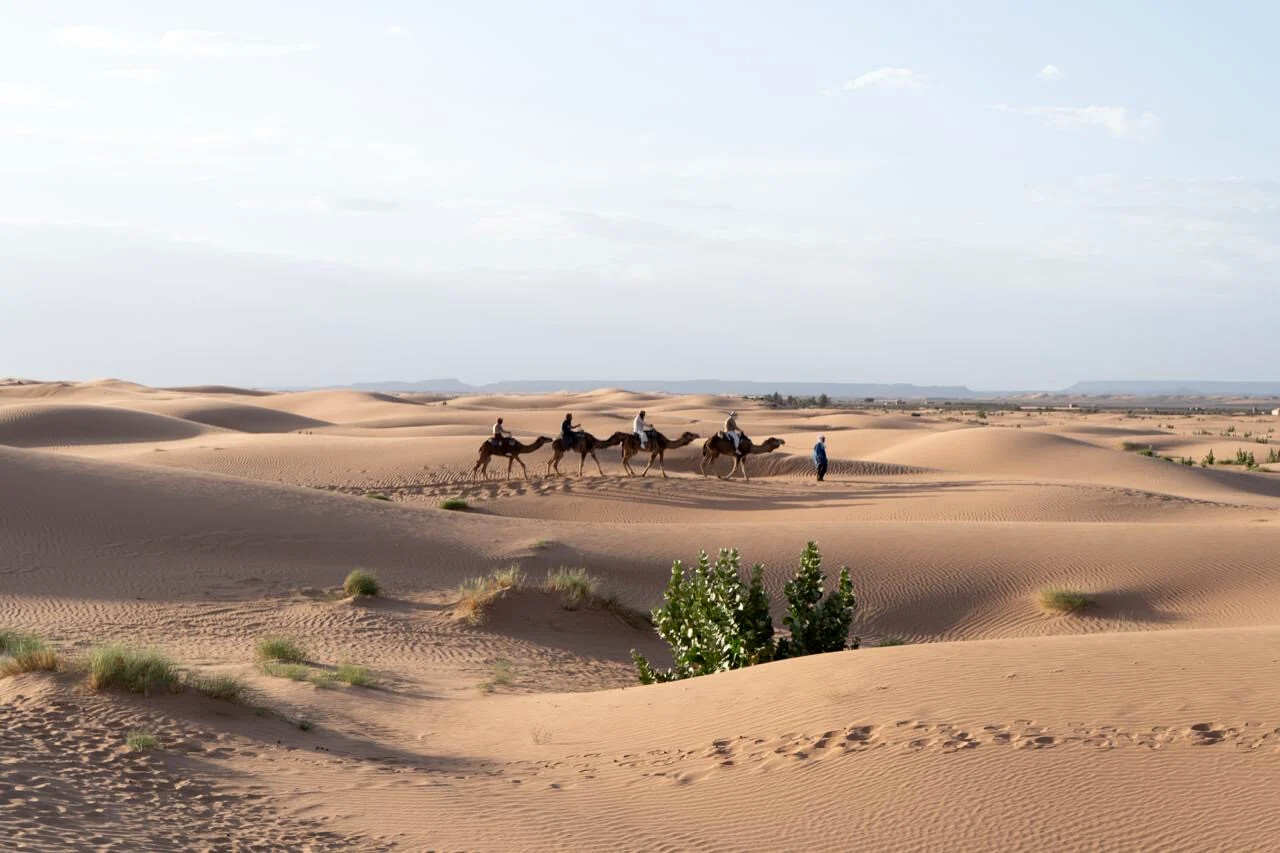
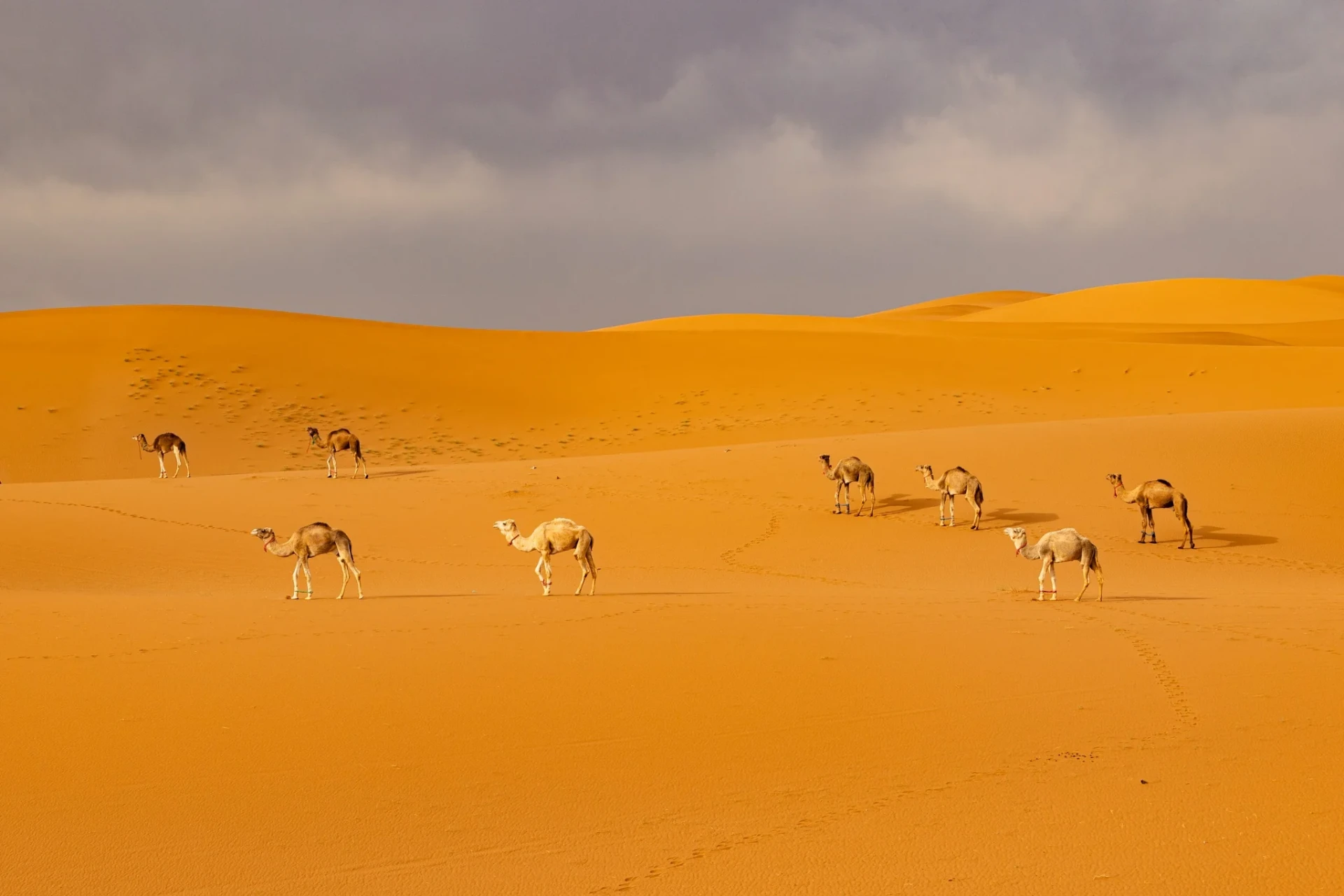
The sunset camel ride into the dunes is usually the highlight for kids, and it's usually approximately fifteen to forty minutes depending on timing and conditions on the day. For most children this is an adventure rather than an ordeal — swaying along a ridge of sand as the light turns gold is exactly the kind of thing they'll talk about for years.
That said, not every child takes to it straight away, and not every family wants everyone on a camel for the full ride. If you have a child who's nervous, very young, or who simply changes their mind on the day, alternative arrangements can usually be discussed with our team — we'd rather adapt on the spot than force a plan that isn't working. The honest thing to do is raise it with us when you enquire, so we can talk through what's realistic for your family before you arrive.
Sandboarding and dune play
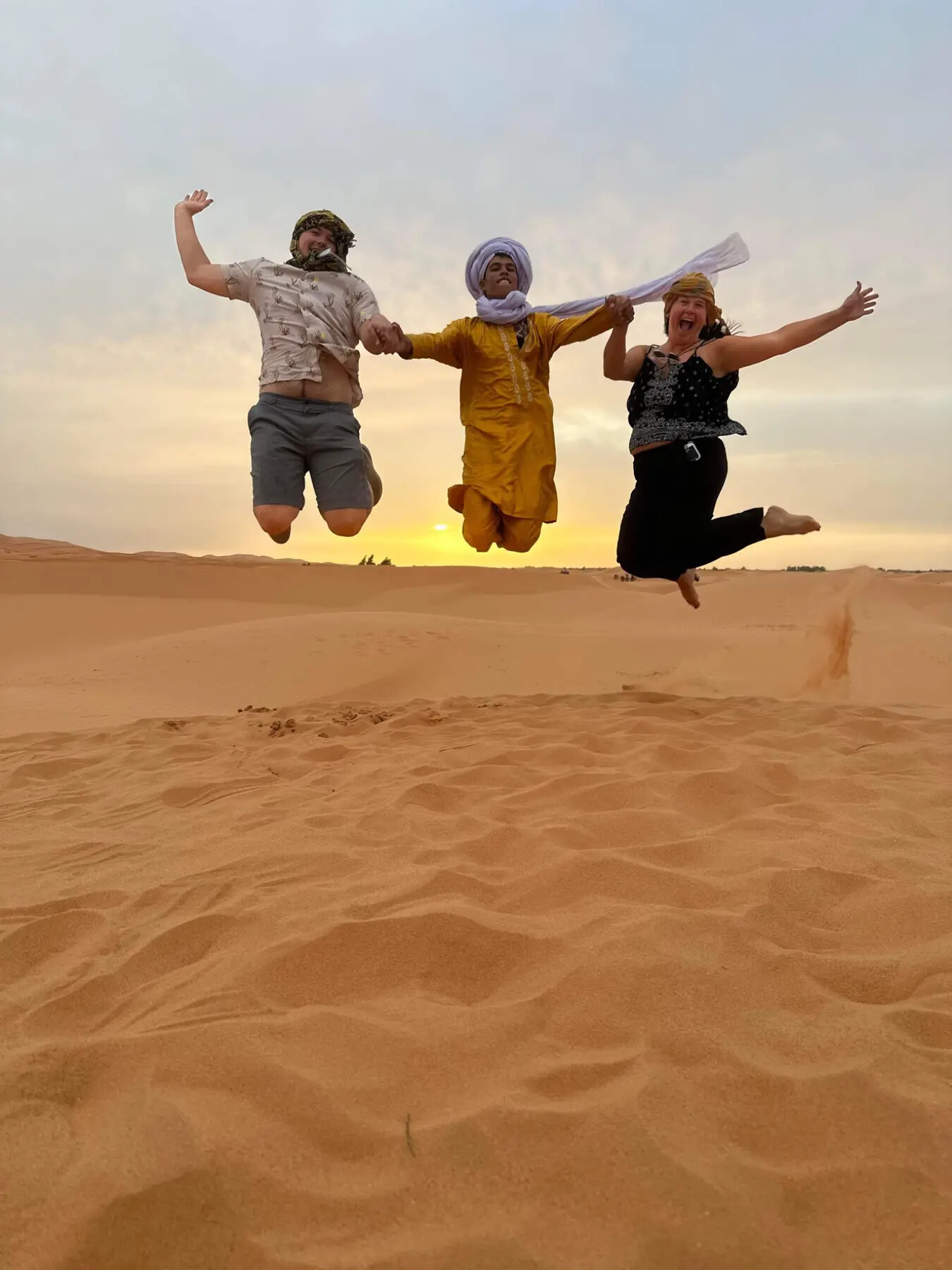
Beyond the camel ride, the dunes around camp are simply a huge, soft playground, and children tend to treat them that way. Sandboarding is available near camp and is popular with kids old enough to manage a board, but plenty of younger children are just as happy scrambling up a dune and rolling or sliding back down under supervision. This unstructured time is often what sticks with kids most — more than any planned activity.
In the evening, campfire music and drumming happen when conditions allow, and children are usually drawn straight into it, clapping along or trying the drums themselves. Stargazing after dinner tends to work well for families too, especially if you bring a torch and let older children help spot constellations.
Food and fussy eaters
Dinner and breakfast are included in every stay, and meals are a proper part of the evening rather than an afterthought. We know families often travel with a fussy eater or a child with specific dietary needs, so the best approach is to tell us about it when you enquire or book. We'll do what we reasonably can to make mealtimes easier, and we'd rather know in advance than try to solve it on the night.
Sleeping in a tent, and reassurance about the cold
Sleeping under canvas is part of the appeal for children, but it can also be where a bit of nervousness shows up — new sounds, an unfamiliar bed, or just being somewhere so different from home. It helps to talk to kids beforehand about what the tent will actually be like: a proper bed, their own bathroom, blankets, and parents right there.
Desert nights can get noticeably cool, especially outside the warmer months, so every tent has a winter gas heater and extra blankets available. If your family feels the cold, or you're travelling with a younger child, it's worth mentioning this when you book so we can make sure you're properly set up before the evening turns chilly.
Managing the long drive there
For most families, the journey to Merzouga is the part that needs the most planning, not the stay itself. Depending on where you're coming from, it can be a full day on the road, and a tired, restless child at the start of the trip rarely makes for the best first impression of the desert. Building in stops, snacks, and realistic expectations about the length of the drive helps enormously.
We work with Morocco Shiny Days' private Sahara journeys for transfers, and they're used to routing families comfortably rather than rushing. You'll meet our team in Merzouga near the Shell service station, and your car goes into secure parking while you're in the desert. Our journeys and transfers page and how it works page cover this side of things in more detail.
Best seasons for families
Rather than quoting exact temperatures, the honest guidance is this: the cooler months either side of the height of summer tend to suit families best, since long car journeys and desert activities are simply easier to manage when it isn't at its hottest. If you're planning around school holidays and want our read on how a particular time of year tends to feel for families with children, ask us when you enquire — we'll give you a straightforward answer rather than a generic one.
Why two nights often suits families
A single night at camp is a full, rewarding experience, but families in particular often benefit from staying two nights. Children take longer to settle into a new place, and a second, calmer day gives everyone room to enjoy the desert without feeling rushed between the camel and the car.
The two-night option can include a full 4x4 day: nomad tea with families living in the desert, a stop in Khamlia to hear Gnawa music performed live, a visit to areas known for fossils, and lunch — often medfouna, a Moroccan stuffed bread — shared with a local Amazigh family. Children tend to find this day fascinating in a different way to the sunset camel ride: it's about people, music, and discovery rather than spectacle, and the change of pace midway through the trip works well for younger travellers. For more on how the two options compare, our guide to one night versus two nights goes through it in detail.
Safety and common-sense supervision
The desert is a wonderful place for children, but it's still an outdoor, open environment, and the same common-sense supervision you'd use anywhere unfamiliar applies here too — keeping an eye on younger children around the fire, on the camels, and while playing on the dunes after dark. Our team is there to help and to answer questions on the ground, but we won't pretend the camp removes the need for normal parental attention.
If you have specific concerns — a very young child, a child with a medical condition, mobility needs, or anything else that might affect how your stay should be arranged — please raise it when you enquire. We'll be straightforward about what we can and can't accommodate, rather than making promises we can't keep.
A short checklist
- Tell us about your children's ages and any dietary needs when you enquire or book.
- Ask about alternative arrangements in advance if a child is nervous about the camel ride.
- Pack extra layers for the evening and night, even if the day has been warm.
- Build rest stops into the drive to Merzouga rather than trying to push straight through.
- Consider two nights if your schedule allows, so the pace feels easier for younger travellers.
- Ask us directly about anything you're unsure of — we'd rather talk it through than have you guess.
If you're ready to start planning, our desert experiences page covers everything included in a stay, and our FAQ page answers many of the other practical questions families ask us. When you're ready, reach out through our contact page and tell us about your family, and we'll help you plan a stay that actually works for you.