Two very different deserts. Access, scale, remoteness and comfort compared, without pretending one is objectively better.
Ask ten travellers about the Sahara and you will get ten different mental pictures. In Morocco, two dune fields do most of the work of shaping that picture: Erg Chebbi near Merzouga, and Erg Chigaga out beyond Zagora and M'Hamid. Both are genuine Sahara. Both can deliver the sunset photograph you have been imagining. But they get there in different ways, and knowing the difference will help you pick the trip that actually suits you, rather than the one that simply comes up first in a search.
What is an erg?
An erg is simply a large sea of wind-shaped sand dunes, as opposed to the rockier, flatter hamada terrain that makes up most of the Moroccan Sahara. Erg Chebbi and Erg Chigaga are the two ergs that visitors can realistically reach and stay in. Everything else billed as "Sahara" closer to the Atlas or along the roads south is usually hamada or scrubland, attractive in its own right but a different experience from waking up surrounded by dunes.
Erg Chebbi sits at the edge of Merzouga, in the southeast near the Algerian border. Erg Chigaga lies further west and further into the desert, reached via Zagora and the small outpost town of M'Hamid, in the Draa valley.
Getting there
This is where the two ergs part ways most clearly. Merzouga has a properly surfaced road running all the way to the dune edge, so a car or a shared or private transfer can bring you right to camp, whatever the season. It is the more predictable option if your schedule is tight, if you are travelling in a group, or if you simply prefer not to gamble a long day on unpaved track.
Erg Chigaga has no paved access. From M'Hamid, reaching camp means a stretch of piste that a 4x4 handles far better than a saloon car, and conditions vary with recent weather. It is not a hardship for anyone reasonably fit and prepared, but it does mean building in more flexibility and expecting the last leg to take noticeably longer and feel rougher than the drive to Merzouga.
For travellers arriving from Marrakech or Fes, see our guide on how to get to Merzouga for route options, and our journeys and transfers page for how we organise the road to camp.
Landscape character
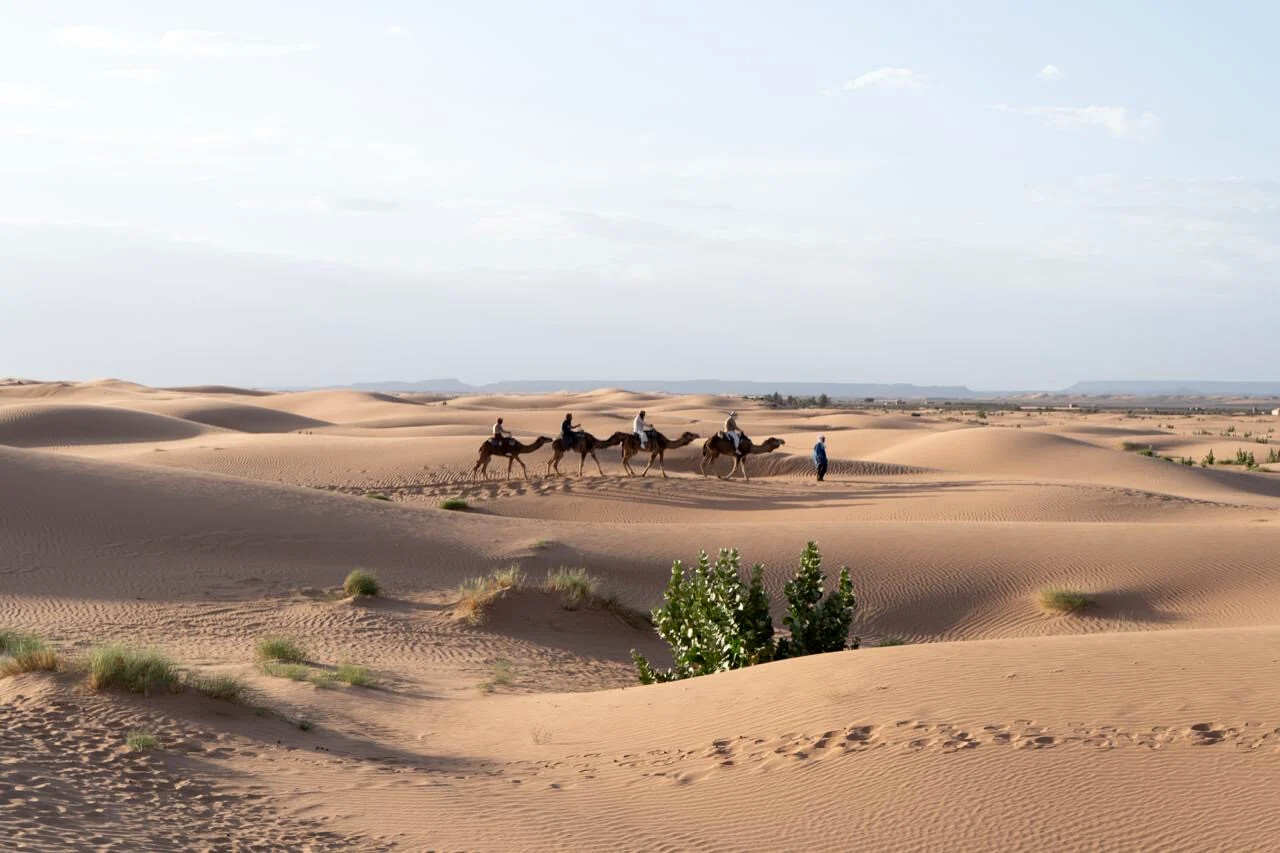
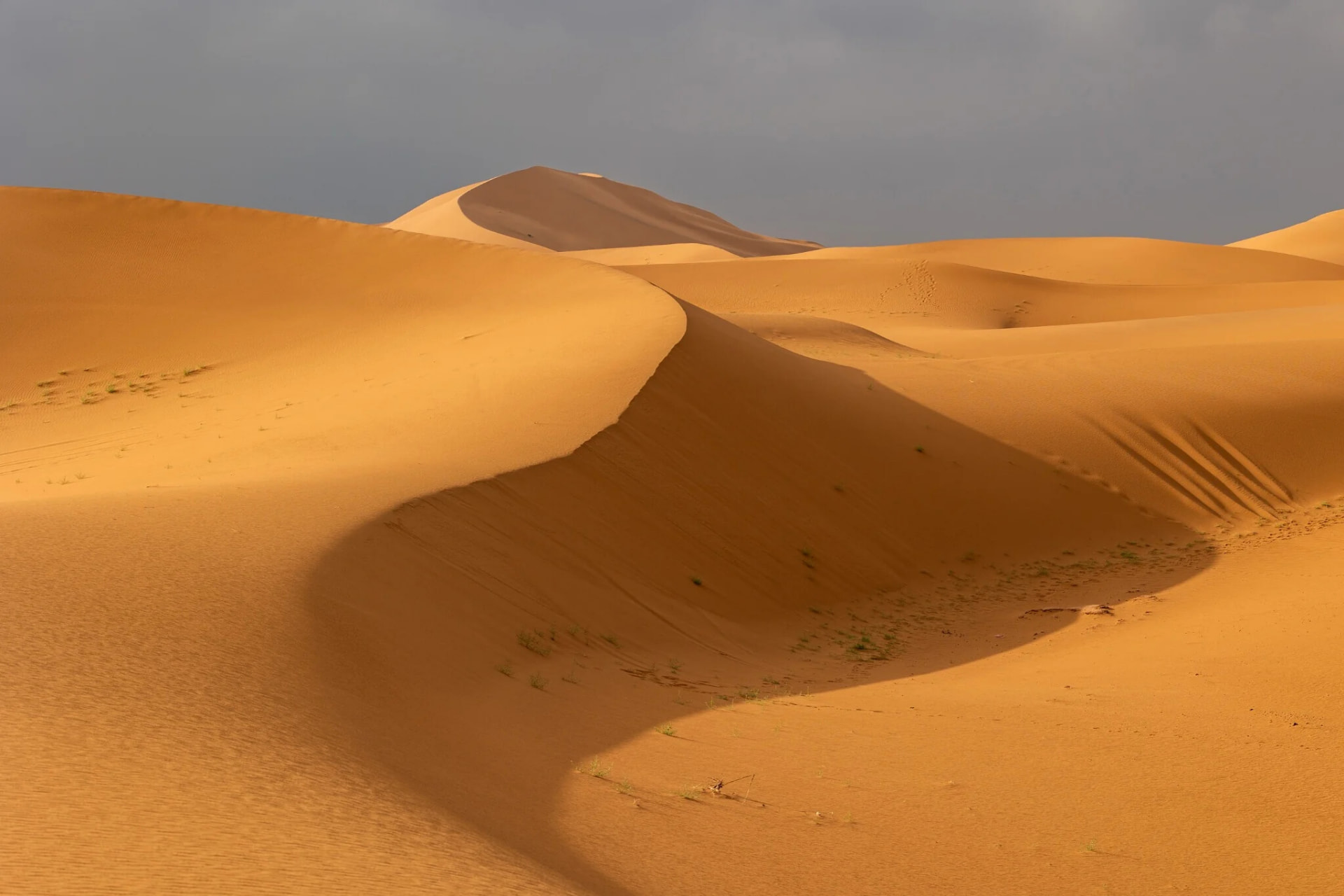
Erg Chebbi is compact and dramatic. The dunes rise close together and close to the village, so within a short walk or camel ride you are fully among them, with layered ridgelines that photograph beautifully at both sunrise and sunset. Because the erg is relatively contained, the sense of scale comes from height and shadow rather than sheer distance.
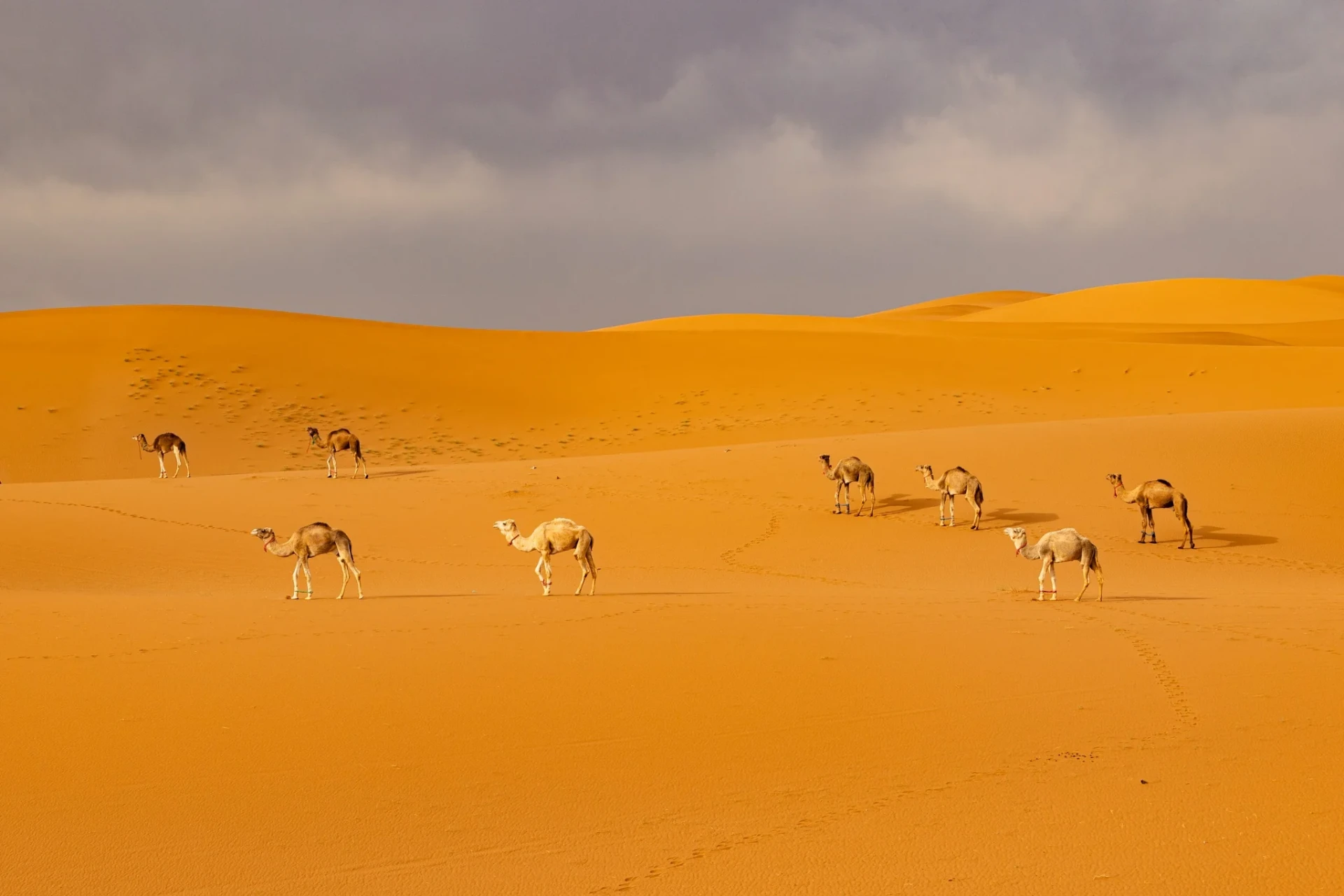
Erg Chigaga is broader and more sprawling, with a wilder, less manicured feel. Getting to it takes you through a longer stretch of open hamada first, so the dunes arrive as a genuine change of scenery rather than something visible from the moment you leave town. Many photographers and repeat desert travellers find this build-up part of the appeal.
Remoteness and solitude
Erg Chebbi has more camps, more visitors, and more infrastructure around it than Chigaga, simply because it is easier to reach. That does not mean it feels crowded once you are settled at a well-placed camp away from the busiest access points, but it is realistic to expect other camps, other camel trains, and other groups sharing the same dune system.
Erg Chigaga is genuinely quieter. Fewer camps operate there, the approach itself limits casual visitors, and evenings can feel emptier and more remote. If solitude is the main thing you are chasing, and you are comfortable with a longer, rougher approach in exchange for it, Chigaga delivers that trade convincingly.
Camp comfort
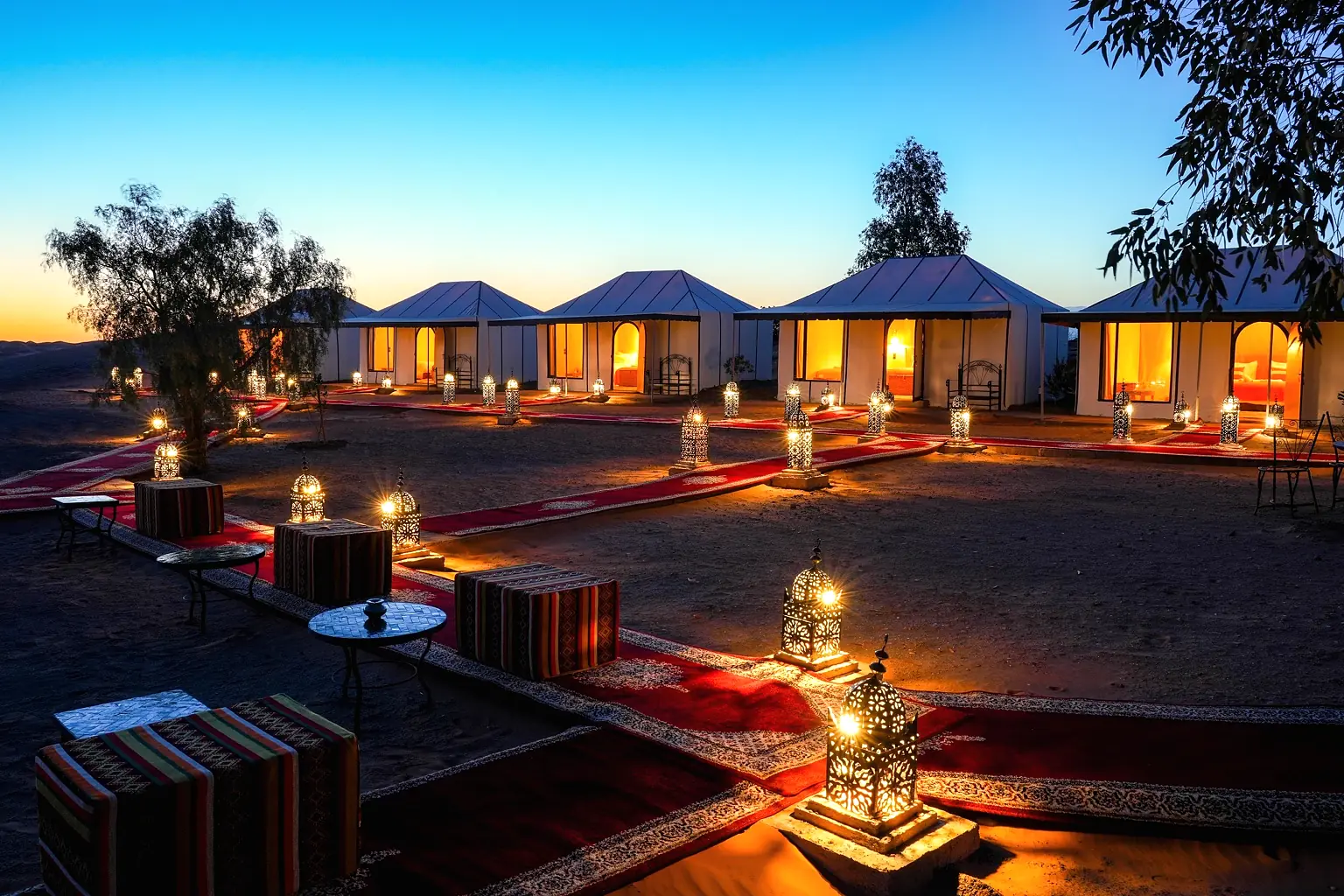
Comfort levels vary camp to camp in both locations, so it pays to check specifics rather than assume. What is realistic to say in general terms: because Erg Chebbi is easier to supply and maintain, camps there can more consistently offer things like private ensuite bathrooms, hot showers, and heating on cold nights without heroic logistics. Chigaga's remoteness makes the same level of fixed infrastructure harder to sustain, and shared or simpler facilities are more common there.
At Arabian Nights Desert Camp, on Erg Chebbi, we lean fully into what the easier access allows: ten tents, four of them family tents sleeping up to six, the rest deluxe doubles, every one with a private ensuite, hot shower and flush toilet, a proper bed rather than a mattress on the floor, a glazed window facing the dunes, and a gas heater with extra blankets for winter nights. Dinner and breakfast are included, alongside a sunset camel ride, sandboarding, campfire music when conditions allow, and stargazing. See the full picture on our stay and desert experiences pages.
What else is nearby
Merzouga and Erg Chebbi sit within reach of a cluster of worthwhile detours. The village of Khamlia is known for its Gnawa music evenings, rooted in the traditions of families who settled here generations ago. Fossil-rich areas nearby draw geology-minded visitors, and it is easy to arrange time with an Amazigh nomad family for tea or a home-cooked lunch. Our own two-night stays typically build in a 4x4 day covering nomad tea, a Khamlia music stop, fossils, and a medfouna lunch with a local family.
Erg Chigaga's surroundings lean a different way. The route down the Draa valley is scenic in its own right, passing palmeries and kasbahs on the way to Zagora, and M'Hamid itself has a frontier-town character as the last real settlement before the open desert. There is less structured "extra activity" infrastructure around Chigaga itself, which suits travellers who want the desert days to breathe rather than be scheduled.
Who suits which
Families and first-time desert visitors generally do better at Erg Chebbi. The shorter, sealed approach is kinder to children and anyone with limited mobility, and the more established camps make consistent comfort easier to guarantee.
Short trips, meaning a night or two slotted into a wider Morocco itinerary, also favour Chebbi, since travel time to and from the dunes eats less of your schedule.
Photographers and travellers chasing a wilder, emptier frame often prefer Chigaga, for the scale of the landscape and the lower camp density.
Repeat visitors who have already experienced Chebbi sometimes head to Chigaga specifically for the contrast, and that is a reasonable way to think about it: not better or worse, but a different chapter of the same desert.
Combining both
It is possible to visit both ergs on a longer Morocco trip, usually by looping south from Marrakech through Zagora and M'Hamid to Chigaga, then crossing east via Rissani to Merzouga and Chebbi, or the reverse. This works best with time to spare rather than a rushed itinerary, since the roads and pistes between the two are not short. If you are weighing up how many nights to give the desert overall, our piece on one night or two nights in Merzouga is a useful starting point, and the same reasoning about pacing applies whether you visit one erg or both.
The short answer
Choose Erg Chebbi if you want reliable access by road, consistent comfort with private ensuite tents and hot showers, a shorter dedicated desert stay, and easy add-ons like Khamlia's Gnawa music and nomad family visits close by.
Choose Erg Chigaga if you have extra time, want a longer overland journey through the Draa valley to be part of the story, prioritise solitude and a wilder landscape over guaranteed infrastructure, and are comfortable with a rougher, 4x4-only final approach.
Whichever you lean towards, it helps to talk it through with people who know both routes well. Our team, and partners such as Morocco Shiny Days, can help shape an itinerary around the erg, or ergs, that suit you. Reach out via contact and we will help you plan it properly.