What genuinely matters in an overnight bag for Erg Chebbi — by season, and with the things people most often forget.
Packing for a night at Arabian Nights Desert Camp is less about volume and more about the right few items. Most guests arrive from a longer Morocco itinerary already carrying plenty of luggage, and the good news is that almost none of it needs to come into the dunes with you. This guide walks through exactly what to bring, what to leave behind, and why the packing list for a desert night looks a little different from anywhere else on a Moroccan road trip.
Why a small bag is enough
When you meet our team in Merzouga near the Shell service station, your car goes into secure parking for the night and you transfer into a 4x4 for the drive into Erg Chebbi. That vehicle swap is the reason a small overnight bag makes so much more sense than a full suitcase: less to load, less to carry across sand, and less to keep track of once you're settled into your tent. See how it works for the full rundown of the meeting point and transfer.
A soft duffel or drawstring bag is far easier to handle than a rigid suitcase, since it will likely sit on your lap or between your feet during the 4x4 ride. Pack for one night only: a change of clothes, the layers below, toiletries, and any electronics you want with you at camp. Everything else can stay in the car until you're back the next morning.
Clothing layers
The single biggest surprise for first-time desert visitors is how much the temperature swings between afternoon and night. Sahara days can be genuinely hot, especially in the sun, while nights turn sharply colder once the sun drops, particularly in the hours before dawn. Conditions vary by season and by year, so rather than packing for a specific number, pack in layers you can add or remove.
- A breathable t-shirt or long-sleeve top for daytime.
- A fleece or warm mid-layer for the evening campfire.
- A proper jacket, windproof if possible, for after dark — this matters more than most guests expect.
- Loose, lightweight trousers rather than shorts, both for sun protection and for comfort on the camel ride.
- Warm socks, even if your daytime footwear is sandals.
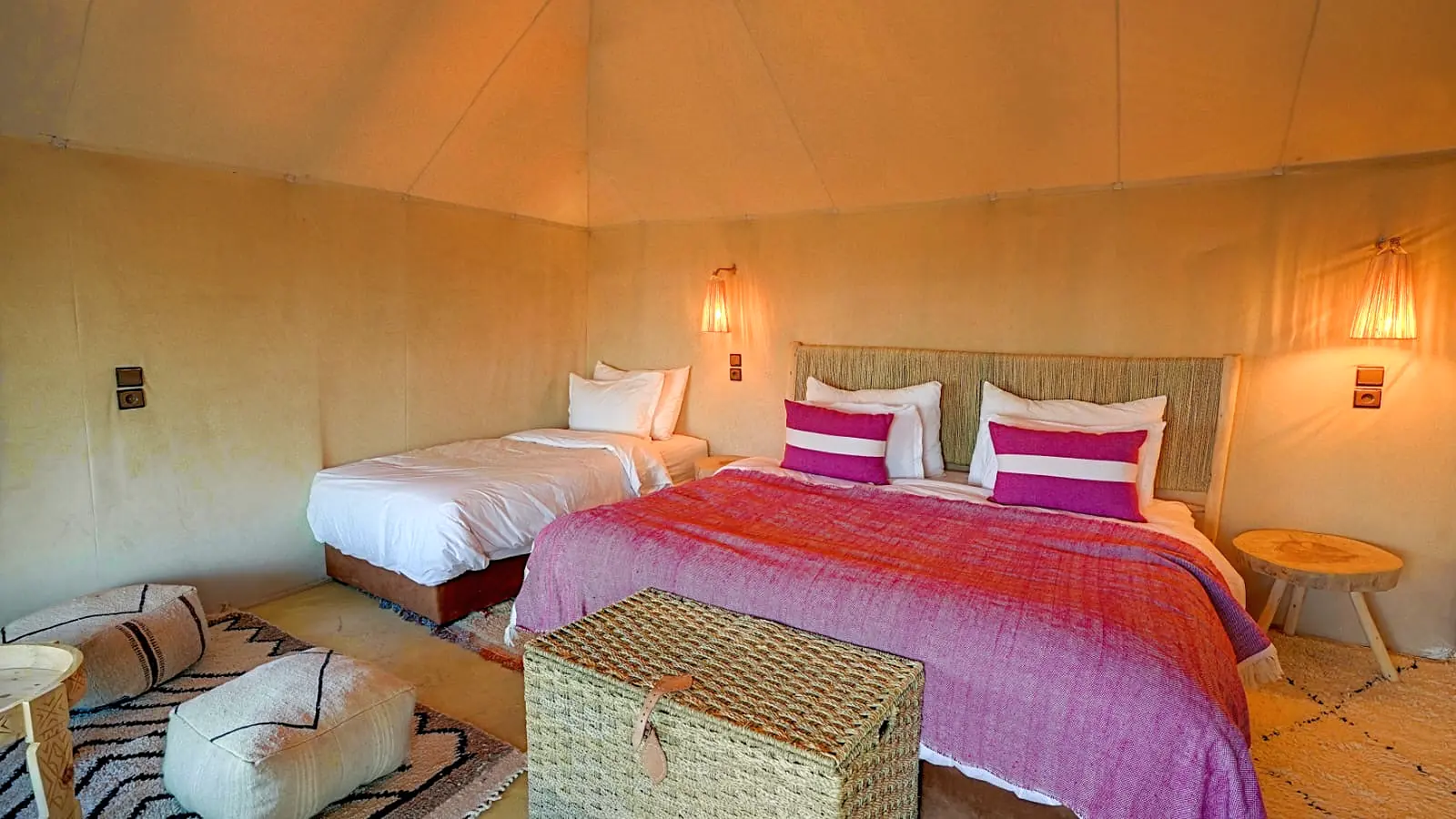
Every tent has its own gas heater for winter nights, plus extra blankets on request, so you're never relying on clothing alone once you're inside. Layers are mainly for the time you'll spend outside around the fire and during the camel ride.
Head and sun protection
A wide-brimmed hat or cap earns its place in any desert bag, along with sunglasses and a sunscreen with a high factor. The Sahara's light is intense and reflects off pale sand, so exposed skin burns faster than people expect, even on hazier days. A light scarf or shesh-style wrap is genuinely useful too: it doubles as sun protection for your neck during the day and a layer against wind and blown sand in the evening.
Lip balm with SPF is easy to forget and easy to need, especially if the wind picks up around sunset.
Footwear for sand
Closed shoes are more practical than open sandals once you're actually walking on dunes, since loose sand gets everywhere in open footwear. That said, many guests happily wear sandals for the camel ride and swap to closed shoes for sandboarding or an evening walk up a nearby dune. A cheap pair of trainers you don't mind getting sandy is often the best solution — sand has a way of finding its way into everything regardless of what you wear.
Whatever you bring, expect to shake sand out of it the next morning, and pack accordingly.
Season-by-season notes
The core packing list stays similar year-round, but the balance shifts with the seasons. Conditions vary and no two nights are identical, but here's the general pattern:
- Spring: Generally comfortable days and cool nights. Bring a warm layer for the evening but daytime clothing can stay light.
- Summer: Hot afternoons, so prioritise sun protection, breathable fabrics, and hydration. Nights are milder than other seasons but can still cool down noticeably after midnight.
- Autumn: Similar to spring, with pleasant days and a growing chill after sunset as the season progresses.
- Winter: The coldest months roughly run from late autumn to early spring, with the sharpest overnight temperature drops of the year. This is when the in-tent heater and extra blankets matter most, and when a proper jacket, hat, and gloves are worth the extra bag space.
If you're unsure what a specific week will bring, ask us before you travel — we're happy to give practical, current guidance rather than a generic average.
Protecting cameras and phones
Fine Sahara sand travels further than you'd think, carried on wind and on your own hands, and it's unforgiving on camera mechanisms and phone ports. A simple zip-lock bag or a dedicated dry bag for your phone and camera between shots goes a long way. A microfibre cloth is worth packing too, both for lenses and for wiping sand off screens.
Try to avoid changing lenses in the open dunes if you can, and keep chargers and cables inside a sealed pouch rather than loose in your bag. We don't have confirmed charging facilities at camp, so arrive with everything charged and ask us in advance if you'll need to rely on power overnight.
Toiletries and the ensuite bathroom
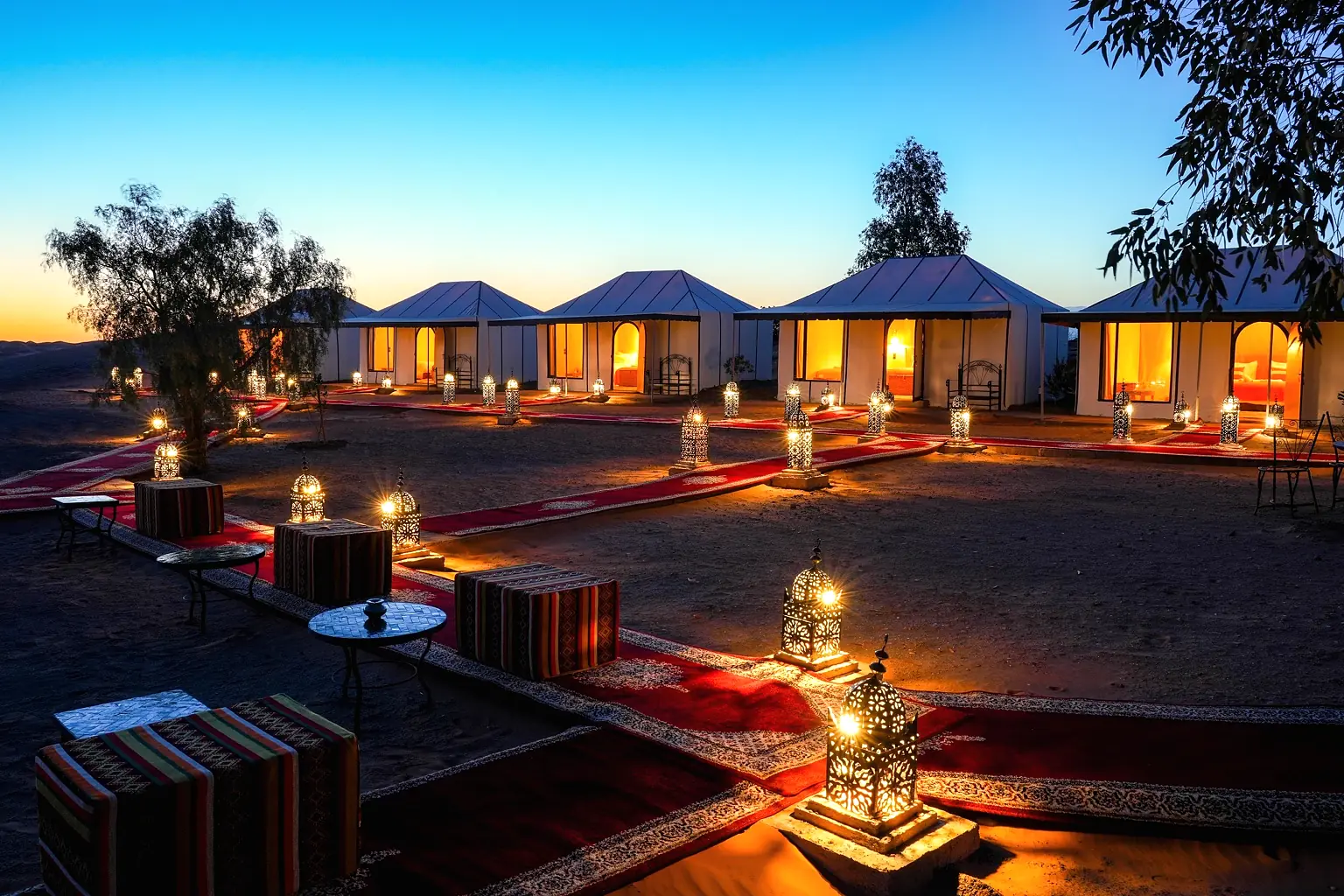
Every tent at Arabian Nights Desert Camp has its own private ensuite bathroom with a hot shower and flush toilet, so you don't need to pack for a rustic camping experience in that respect. Bring your usual toiletries — toothbrush, toothpaste, any skincare you rely on — plus a small towel if you prefer your own, though basics are generally handled by the camp itself. If you have any specific requirement, it's always best to ask us ahead of time.
Hand sanitiser and a small pack of tissues are handy extras, useful both around camp and during the drive in.
What to carry on the camel ride
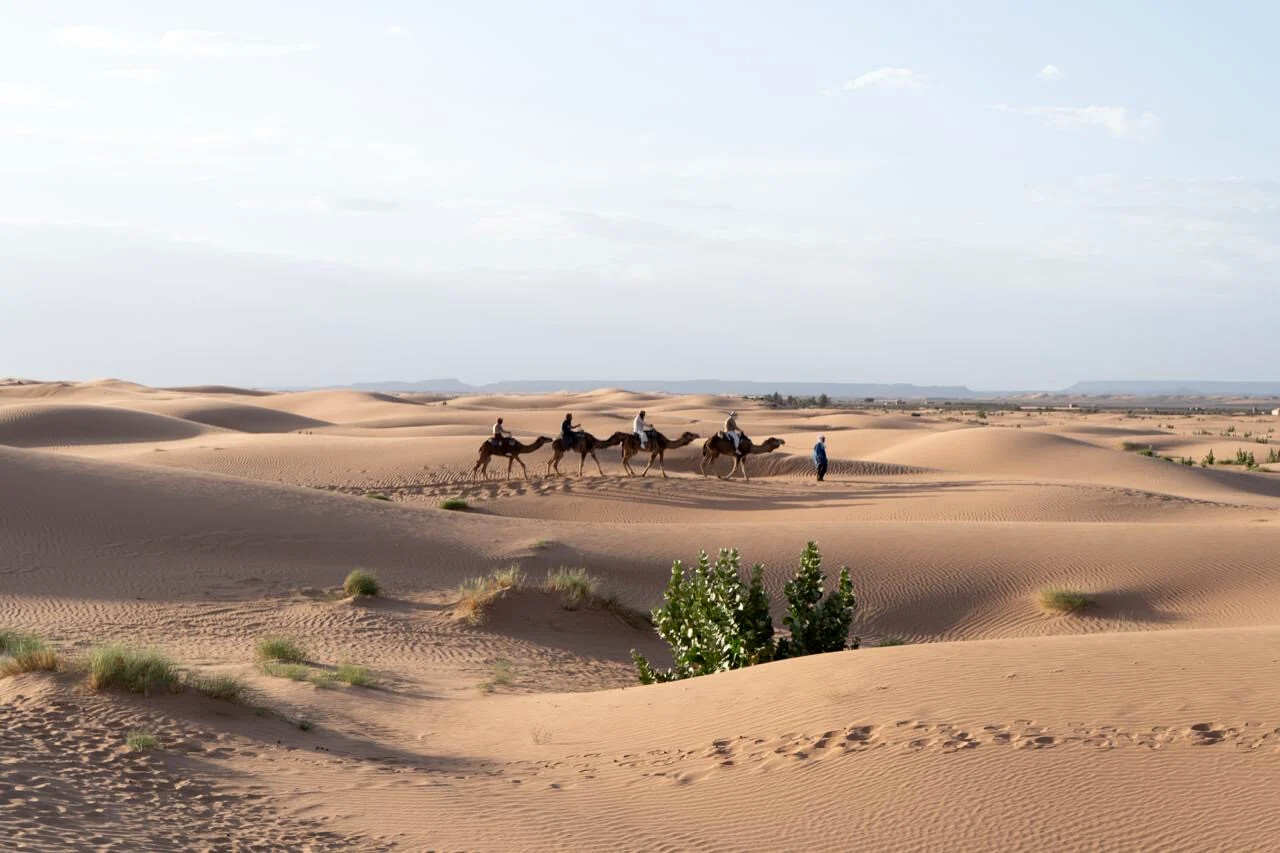
The sunset camel ride usually lasts somewhere around fifteen to forty minutes, so pack light for it: your phone or camera, secured in a pocket or cross-body bag rather than loose in your hands, and a layer for when the sun starts dropping. Flowing scarves and loose wraps look lovely in photos but can catch on the saddle, so keep anything like that snug rather than trailing.
Leave larger bags, tripods, and anything fragile back at camp for this part of the experience — the guides can advise on the best spot to stow things beforehand.
Photography and stargazing kit
Erg Chebbi's lack of light pollution makes for genuinely striking stargazing, and it's worth packing a little kit specifically for it. A basic tripod makes a real difference for night sky shots, and a headlamp or small torch is invaluable for finding your way between the campfire and your tent after dark. Spare batteries are worth bringing since cold nights drain them faster, and phone battery packs are useful if you plan to shoot for a while.
A blanket or extra layer to sit on the sand while you wait for your eyes to adjust to the dark rounds out a comfortable stargazing setup.
What to leave in the car
Since your vehicle stays in secure parking in Merzouga overnight, use it. Leave large suitcases, spare clothing for the rest of your trip, chargers you won't need for one night, and any valuables you don't want exposed to sand or campfire smoke. The lighter your overnight bag, the easier the 4x4 transfer and the walk to your tent will be.
If you're combining the desert night with other stops, our guide to what to expect at camp covers the wider arrival experience in more detail.
If you are not self-driving, Morocco Shiny Days can arrange a private journey to Erg Chebbi, with luggage carried by vehicle while you take only what you need into camp.
Final checklist
- Small overnight bag or duffel, not a full suitcase
- Layers: t-shirt, warm mid-layer, jacket for evening
- Warm socks and closed shoes, plus sandals if you like
- Hat, sunglasses, sunscreen, lip balm with SPF
- Light scarf or wrap
- Toiletries and a small towel if you prefer your own
- Phone or camera in a sealed bag or pouch, plus a microfibre cloth
- Headlamp or torch, spare batteries, tripod if you're into photography
- Everything else left in the car in secure parking
For details on tent facilities, take a look at our accommodation page, and if anything on this list doesn't quite answer your question, check our FAQ or reach out directly via contact before you travel. A little preparation goes a long way toward a comfortable night under the Sahara sky.